
On October 31, 2025, at Fantoni’s headquarters in Osoppo, the final piloting step of the ACTAS project – Advancing Contract Furniture through Design-Driven Servitization Strategies towards Sustainable Transition: Activating, Testing and Adopting took place. The project was carried out by the Design+Strategies research team of the Politecnico di Milano with the aim of supporting Fantoni—an Italian company operating in the contract office furniture sector—on a transition path toward more sustainable models based on the integration of services. To achieve this goal, the research team applied and tested a piloting process designed to guide companies in the evolution from a product-centered offering to a service-oriented one. The process actively involved company employees, who were invited to imagine the future of the sector and to co-design solutions for the implementation of more circular and service-based models.
ACTAS Project: Exploring sustainable transition
Design and servitization in the contract furniture sector
From imagination to action: co-creating the sustainable transition in contract furniture
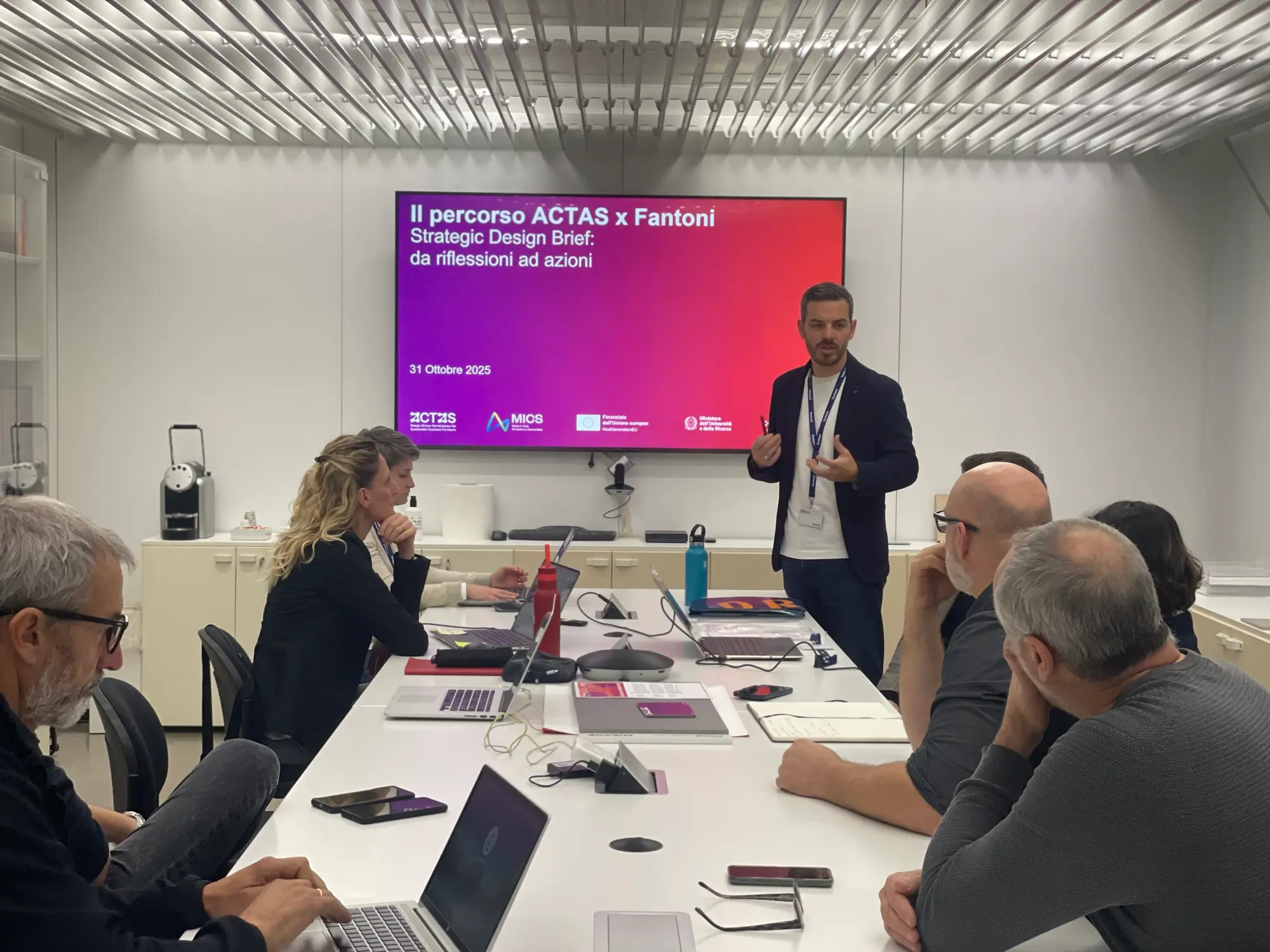
ACTAS is a research project funded by the Italian Ministry of University and Research (MUR) with resources from the European Union under the NextGenerationEU programme, through the Made in Italy Circolare e Sostenibile (MICS, code PE_000004) initiative. The project was conceived to support Italian companies in the shift from a purely product-based offering to an integrated product-service model (Product-Service Systems – PSS), while fostering innovation, competitiveness, and environmental sustainability.
A structured research process towards sustainability
The ACTAS pathway was developed through a design-driven approach, articulated into an initial exploratory phase followed by an experimental phase. The process began with a preliminary research phase aimed at gaining an in-depth understanding of the sector context, company dynamics, and emerging opportunities. The analysis of market trends and internal processes made it possible to contextualize the transition model and to identify the first strategic levers to guide the company’s evolution.
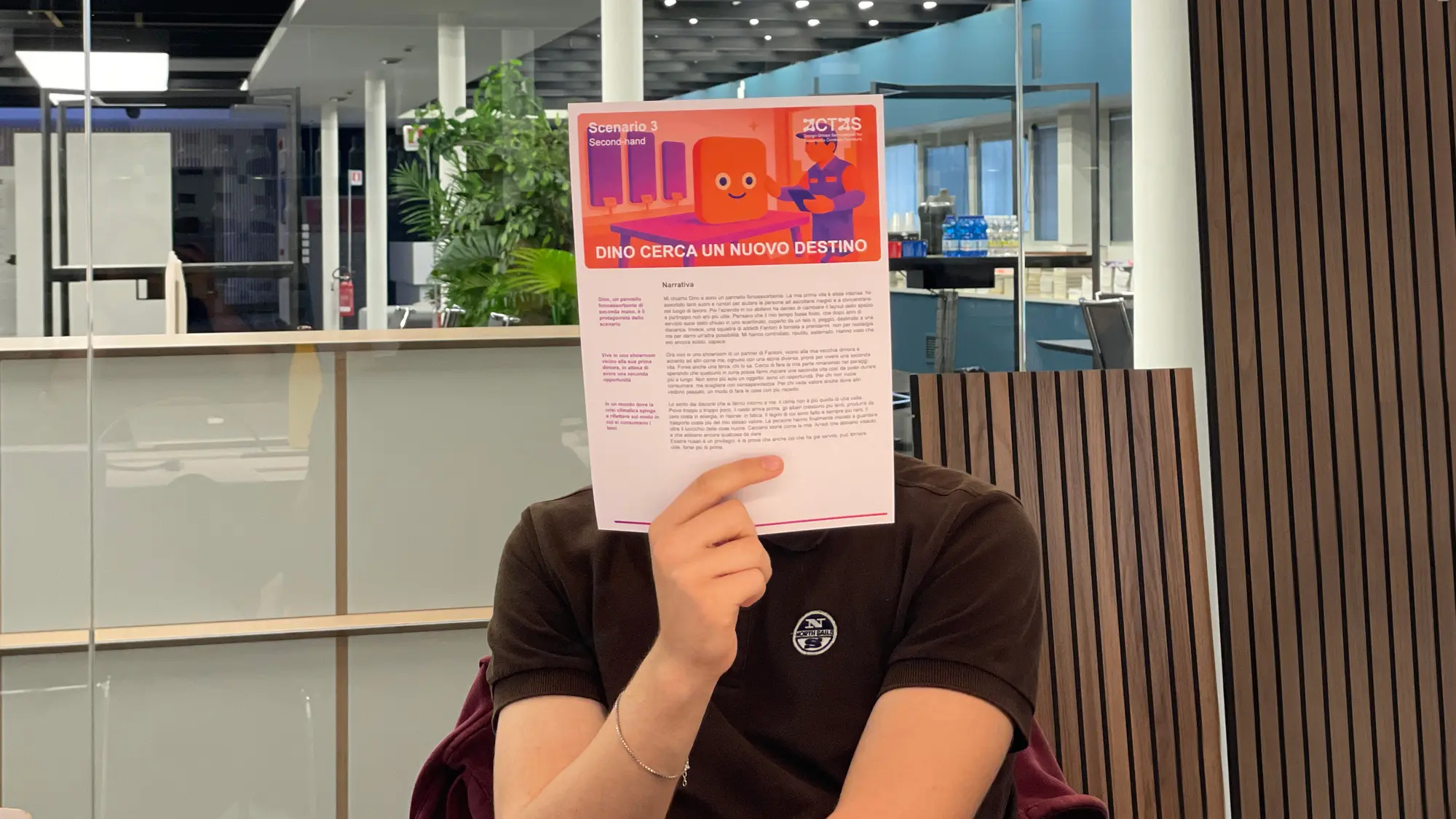
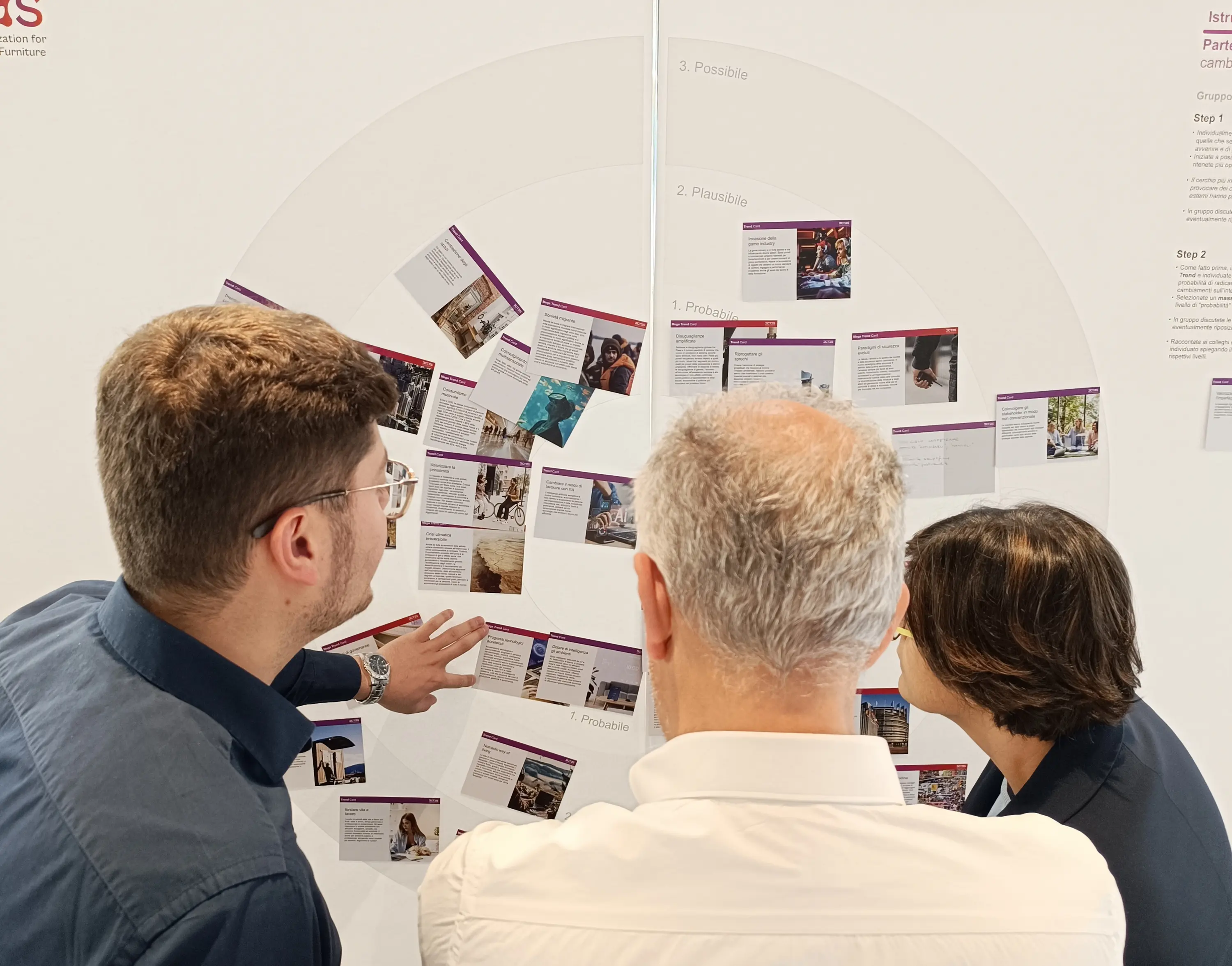
This phase was followed by a series of three participatory workshops involving employees from different company functions, designed to combine strategic vision with operational knowledge. The first workshop focused on understanding and mapping the current system, identifying strengths, criticalities, and potential areas for integrating sustainability-oriented services within existing practices. In the second workshop, participants were guided in exploring possible futures for the contract sector, imagining evolutionary scenarios shaped by global trends and circularity strategies, and reflecting on the transformative role that servitization can play for the company. The third workshop led to the evaluation and selection of the most relevant and realistic scenarios, translating these visions into initial strategic directions and solution ideas to support the transition toward service-based business models. Finally, an ad hoc tool was developed to enable the company to create a structured brief for the design and integration of services within its current offering.
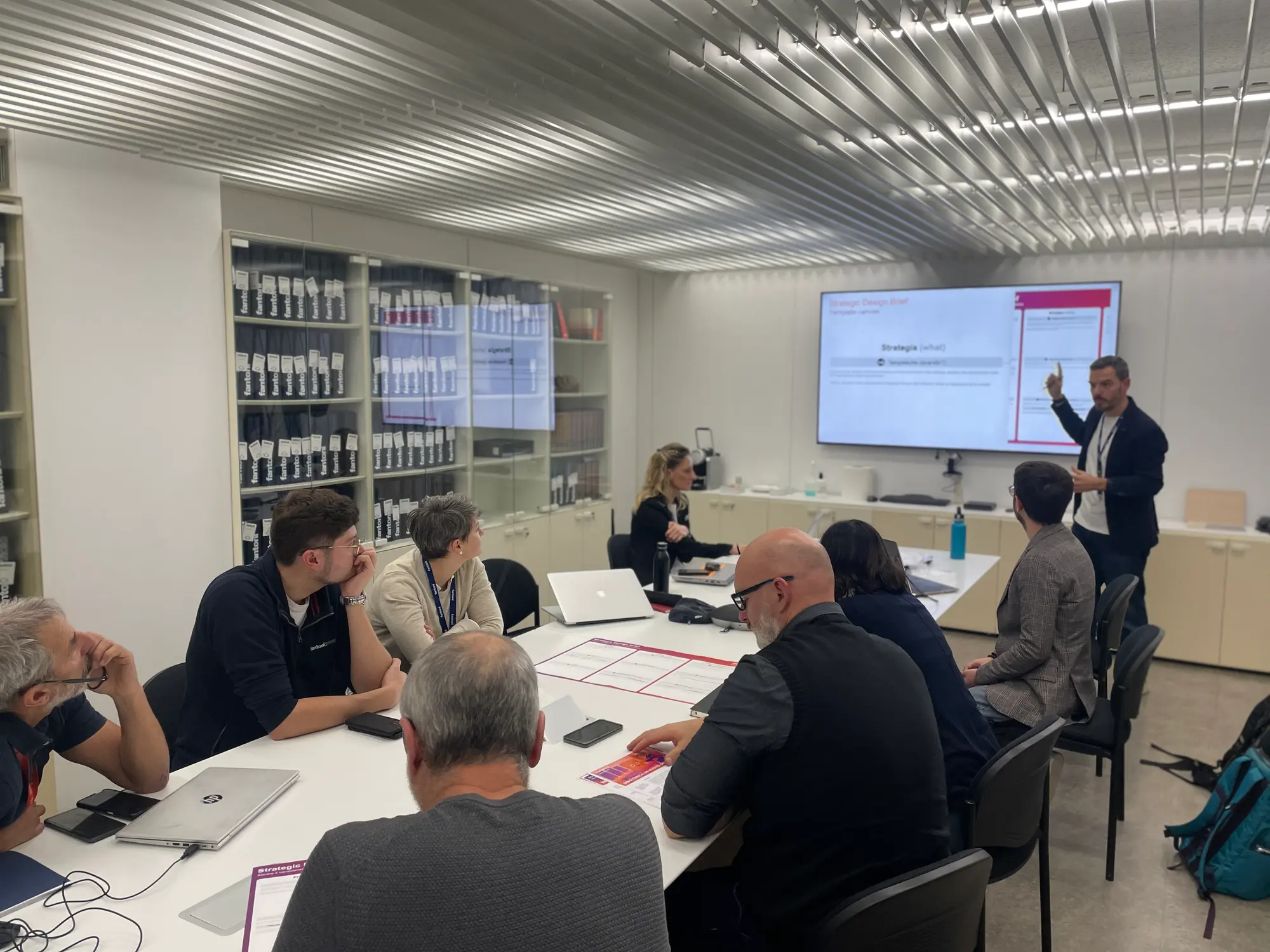
Overall, the piloting activated a process of internal awareness and engagement, fostering a shared understanding of the challenges and opportunities related to sustainable transition. The outcome is a set of perspectives and guidelines that orient the company toward a future in which services become a central lever for value creation, impact reduction, and the rethinking of the role of products in the development of more circular solutions.
ACTAS represents an important contribution to both the knowledge base and the practical application of design strategies supporting organizations in their transition toward sustainable, shared-value-oriented business models, integrating design thinking, participatory practices, and operational tools for servitization.