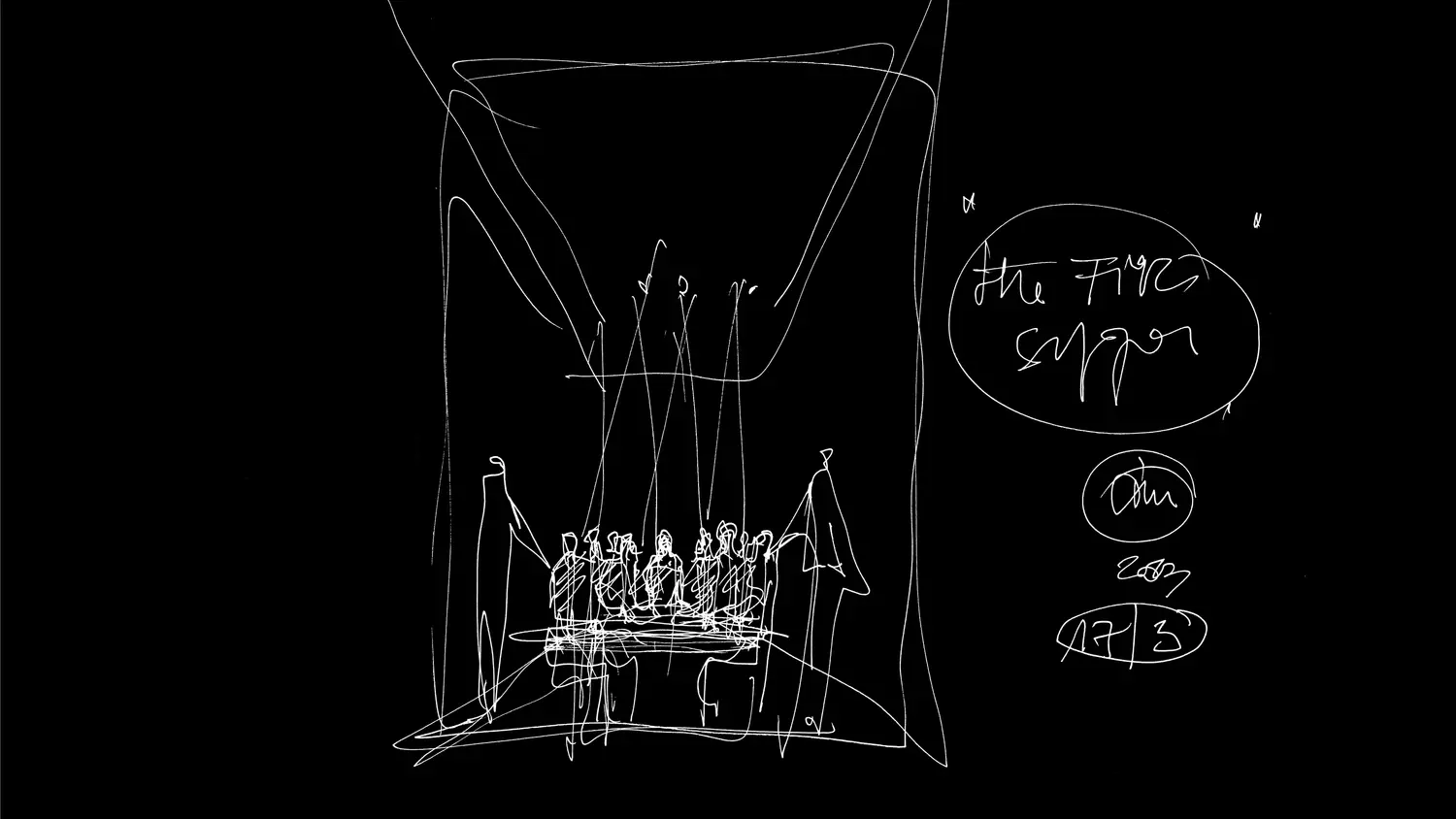
The project, curated by Paola Bertola, Agnese Rebaglio, Giampiero Bosoni and Laura Carugati, promoted by the Department of Design together with the School of Design and the POLI.design consortium celebrate the thirtieth anniversary of the inauguration of the first Degree Course in Industrial Design at the University, which started in October 1993, thirty years after the institution of the first teaching in "Artistic Design for Industry" (1963).
Design Philology
A historical and philological research project to celebrate design at Politecnico di Milano
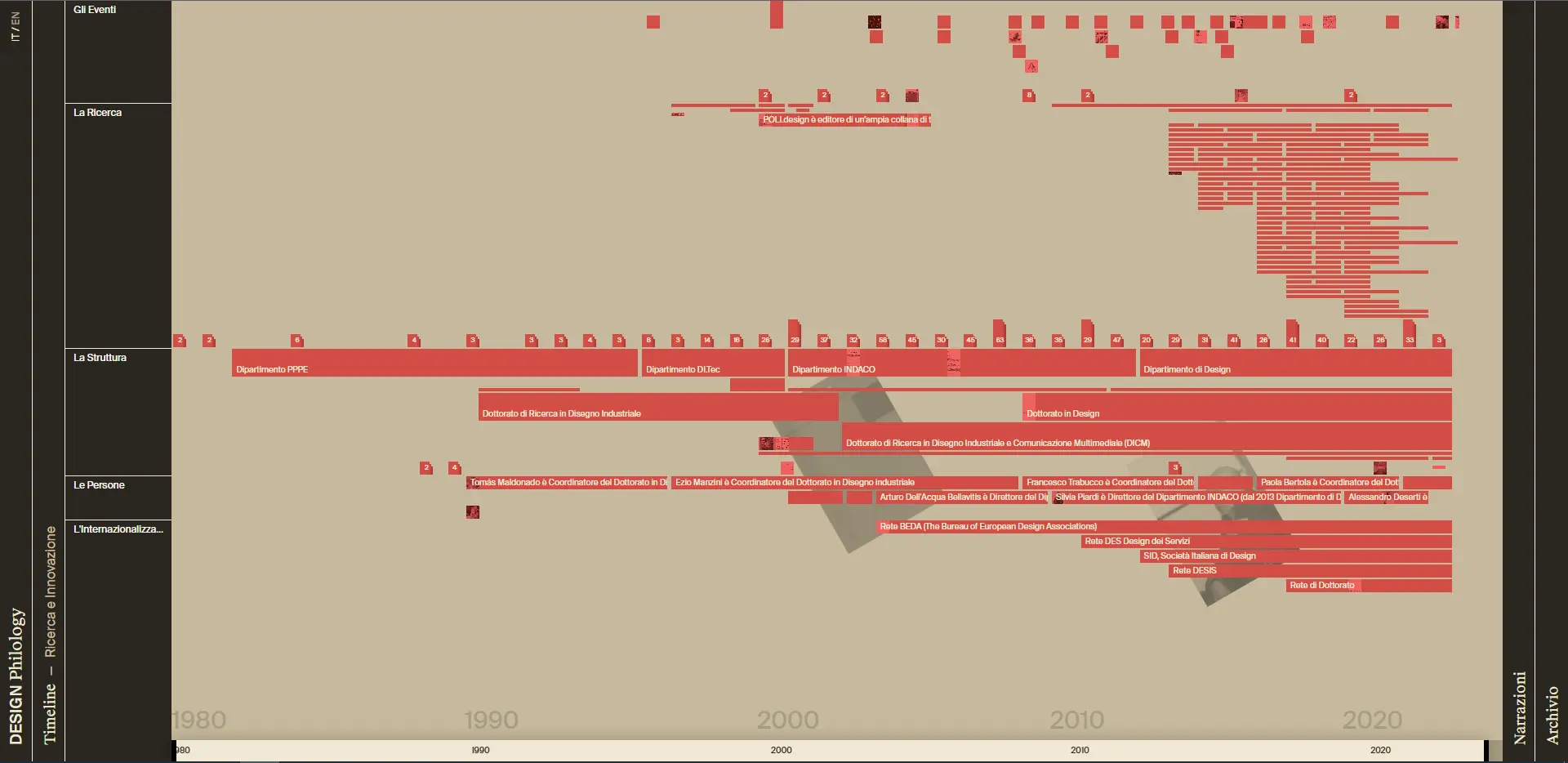
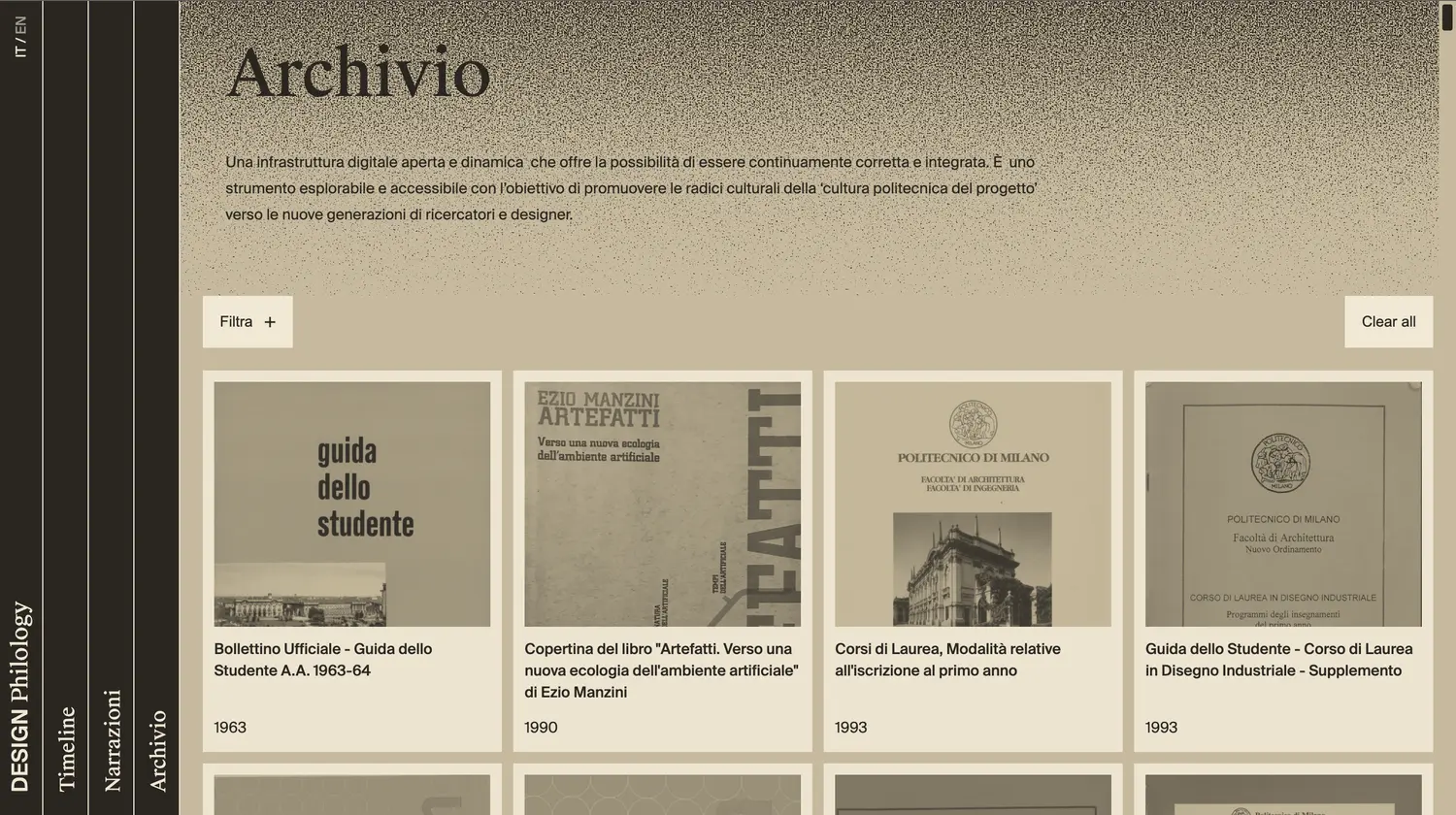
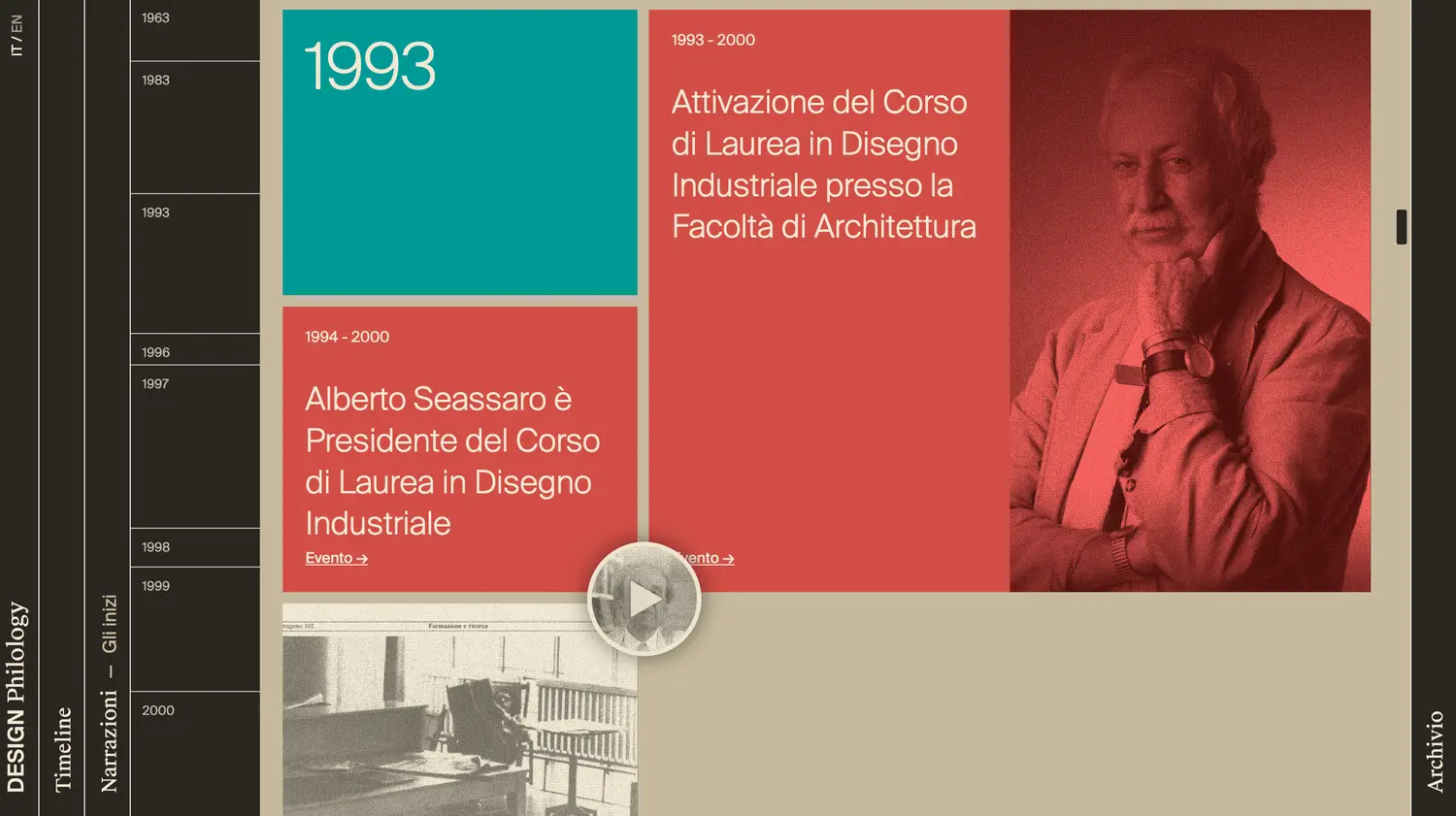
Design Philology is a historical and philological research project that, starting from a reflection on the memory and cultural roots of the discipline of design, recounts its evolution through documents, texts, images, videos and data, with the aim of returning and celebrating the complexity and richness of design culture at Politecnico di Milano.
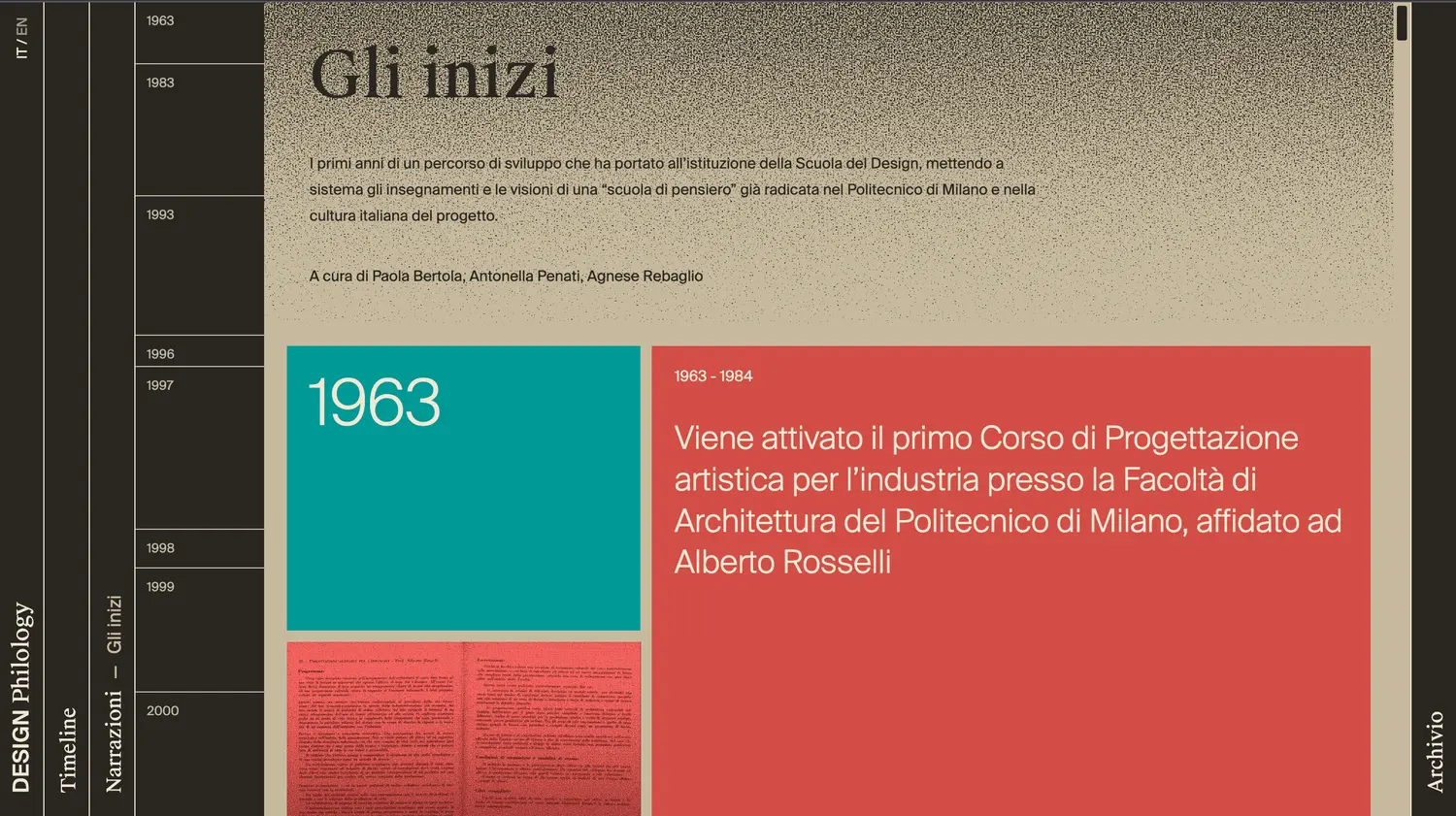
The collected documents become concrete traces that compose a rich and multifaceted mosaic, whose pieces do not remain isolated, but relate and connect with each other, giving shape to different narratives organized along an interactive timeline that, enhancing the potential of digital, can be explored in multiple dimensions. The same principle animates the initiative's visual identity, designed by Umberto Tolino, the University's Communications Delegate, in collaboration with Andrea Manciaracina.
The Philology platform, designed by Marco Quaggiotto, Associate Professor in the Department of Design, with Arianna Priori, is thus a digital archive but also a place for setting up digital exhibitions and studying narrative lines always open to be integrated and enriched.
Design Philology provides room for studies and in-depth analyses from various "curators," in a pluralistic view of history, and is inaugurated with the launch of eight paths, to which new ones will be periodically added.
«Philology explores, in addition to the digital archive, a narrative dimension, offering the opportunity to anchor ever-new and diverse paths of in-depth analysis to the timeline, in a plural and multifaceted view of history»
In the spirit of Renaissance philological research, which focused not only on preserving classical texts for duplication, but rather on understanding the inspiring principles to be applied to a new vision of the future, the archive relies on a sophisticated digital infrastructure that combines expertise in interaction design, data visualization, movie design, and exhibit design.
The historical and philological research work relied on materials preserved in the Historical Archives of Politecnico, and the substantial contribution from a large portion of the Polimi Design System community. Each collected testimony has served as a valuable or fundamental piece to reconstruct the nearly half-century-long history that Philology aimed to narrate and make easily accessible, especially for the new generations of researchers and designers.
Design Convivio
The exhibition, born within the Design Philology project, stages an imaginary conversation among eight Masters of Politecnico, key figures in design culture: Gio Ponti, Franco Albini, Carlo De Carli, Marco Zanuso, Achille Castiglioni, Vittoriano Viganò, Alberto Rosselli, and Raffaella Crespi.
The Design Convivio installation was hosted by the Historical Library of Politecnico and the ADI Design Museum. In the coming months, it will find a permanent home at the Campus Bovisa Durando of Politecnico di Milano.
Design Convivio is curated by Paola Bertola and Giampiero Bosoni.
The dialogues are curated by Gianni Biondillo and Paola Albini, based on original quotes selected by Giampiero Bosoni and Marta Elisa Cecchi.
The set design is by Ico Migliore.