
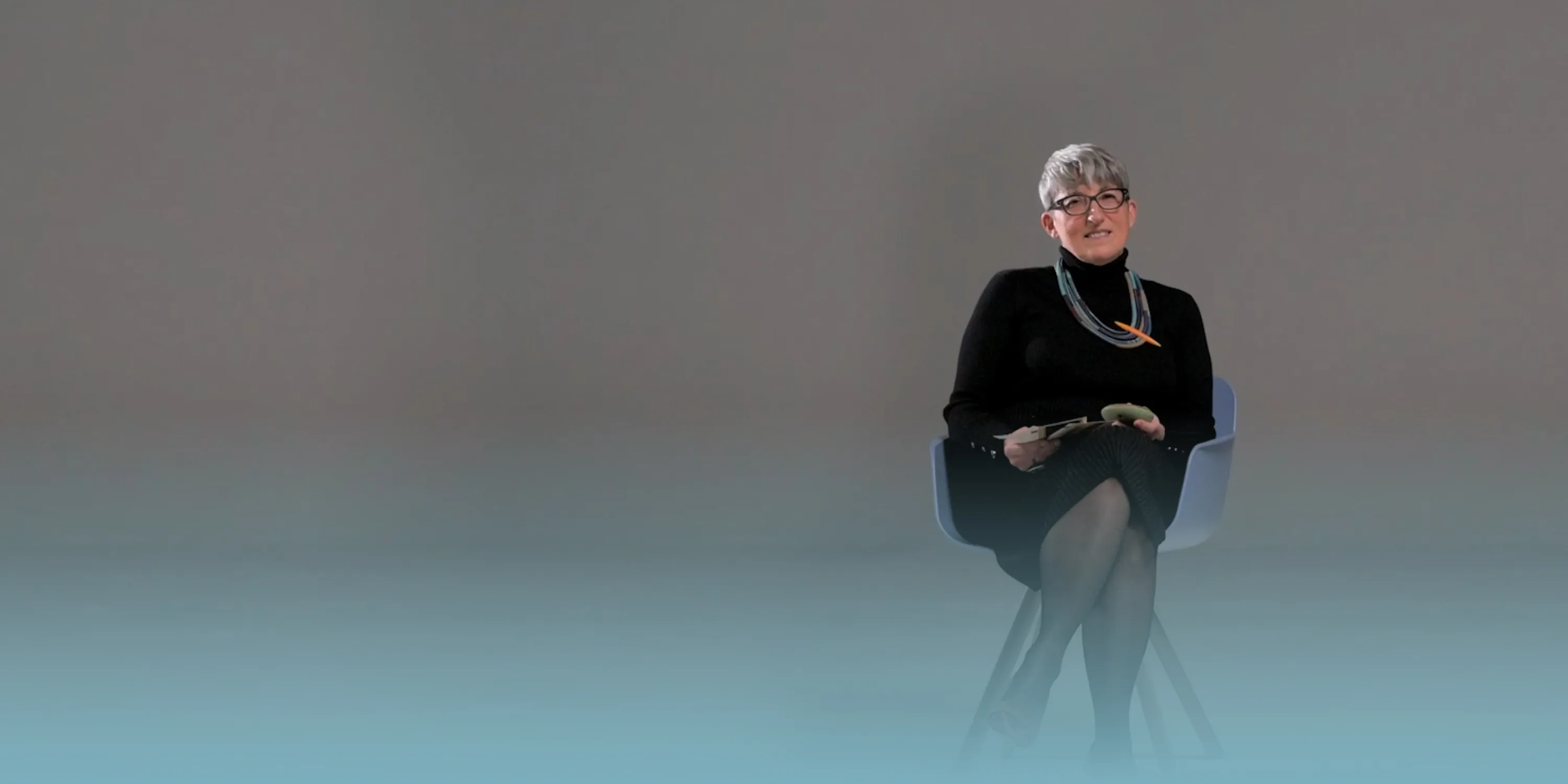
The object I am holding is a representation of a Roman votive lamp, designed for a small museum located along Hadrian’s Wall, the limit of the Roman Empire in the north of England. The lamp invites visitors to explore the collection and immerse themselves in the world of Roman religion and rituals. At the entrance, visitors encounter Juno, the queen of the roman gods, who gives them this lamp with three votive lights. Inside the museum, there are thirteen deities, but the visitors have only three lights to offer. They must choose carefully, as the deities to whom they dedicate the offerings will determine their fate on Hadrian’s Wall – the frontier of the Empire.
In designing this experience, we wanted visitors to understand that what we now see as stones were, for the ancient Romans, altars imbued with deep symbolic meaning.
We observed that visitors who interacted with the lamp significantly enriched their museum experience: they became more active, explored the space, discussed, compared perspectives, and made deliberate choices. It was something entirely new and different from the traditional ways of engaging with a museum.
This project was developed in collaboration with English Heritage and colleagues at Sheffield Hallam University. It is one of several installations I have designed as part of collaborations with various European museums. Among them was an exhibition in the city of The Hague in The Netherlands, focused on the German occupation of the city during World War II, which juxtaposed the contrasting testimonies of German soldiers and Dutch civilians. In Italy, I collaborated with the Museo Storico Italiano della Guerra, intertwining the voices of soldiers and civilians from World War I.
My work is guided by the belive that technology must serve design. Technology itself is not the driving force – what matters is the object, our presence, and the way we inhabit the museum space. It is through movement, interaction, and physical experience that we create a connection with the past. Technology remains invisible but generates a silent kind of magic, as spaces and objects respond to our gestures, evoking a sense of participation and wonder.
In my research, I use touch, bodily experience, spatial movement, and first-person storytelling as design tools. The result is a personal, unique visit in which each visitor chooses what to do and what to listen to.
This personal journey is captured in these postcards, designed to help visitors remember the specific experience they chose to live within the museum.
If you are intrigued by this new and different way of communicating cultural heritage, I invite you to watch the meSch project videos on YouTube or contact me directly to discuss it further.