Open COmeta

A shared project platform for people with autism

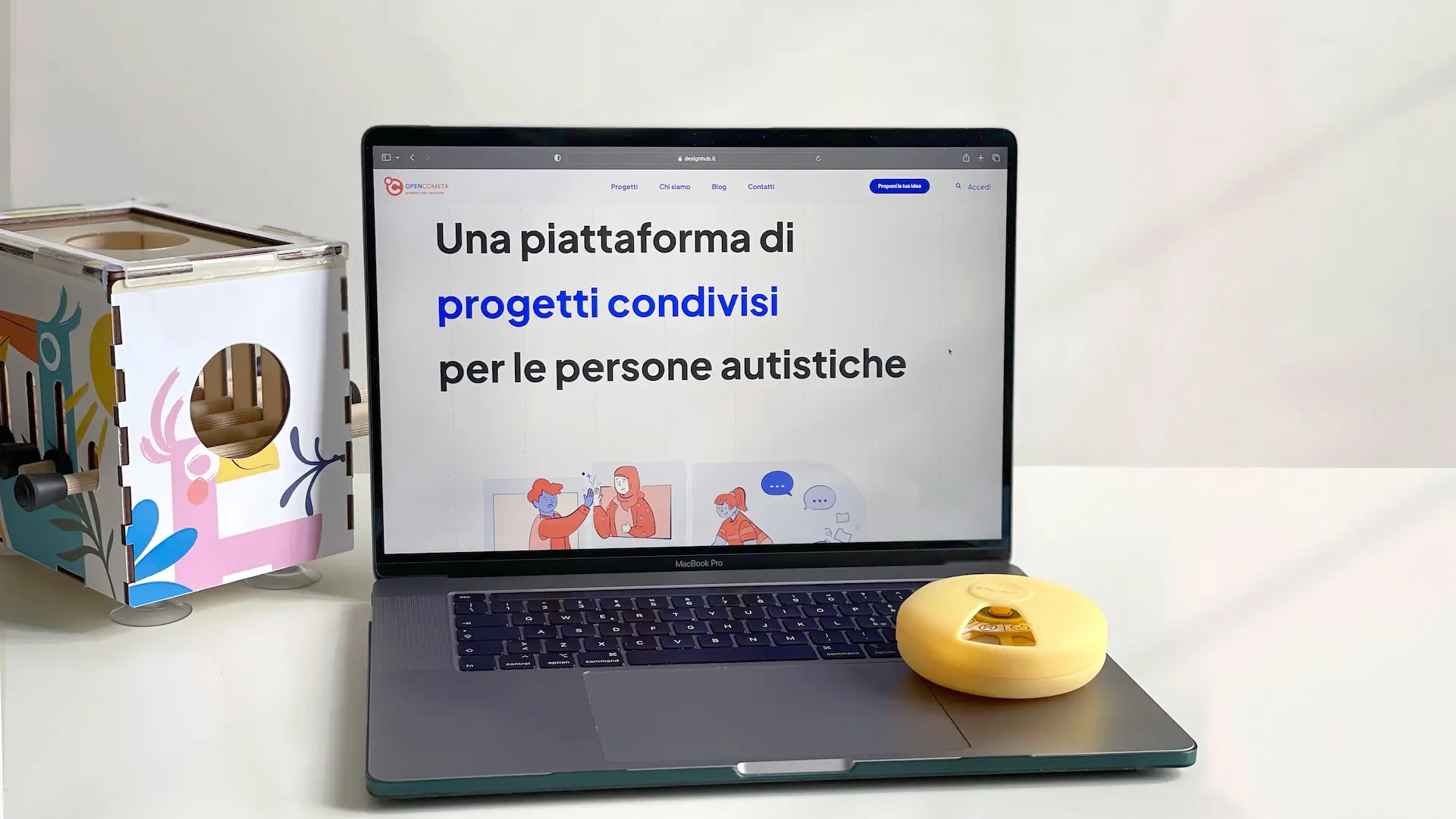
The image shows an open laptop, a MacBook Pro, positioned centrally on a clean white surface. The screen displays a webpage with the Italian title: "Una piattaforma di progetti condivisi per le persone autistiche" (A platform of shared projects for autistic people). To the left of the laptop is a colorful wooden activity box, and to the right, placed on the laptop's palm rest, is a small, light yellow round object. The lighting is natural and even, coming from the left, and the entire shot has a sharp, professional style.

After a decade-long experience, the COmeta Metadesign Lab launches Open COmeta, an open-source platform that aims to create a collaborative community whose members, by sharing or improving projects on the platform, are capable of generating a positive and real impact on the lives of people with autism.

The Open COmeta project stems from the decade-long experience of the COmeta Metaproject Lab, which is a second-year course in Product Design at the School of Design of Politecnico di Milano.

The course, a collaboration between Fondazione Trentina per l’Autismo, and Professors Giuliano Simonelli and Venanzio Arquilla, aims to sensitize students to the social usefulness of design with a focus on autism, and it involves associations, psychologists, and trainers to provide the young designers with adequate knowledge to face the pathology, which is highly complex.

Over the years, the challenge has grown, and other important organizations have joined, including Abilitiamo, L’Abilità, La nostra Famiglia, Fratenità e Amicizia, Fondazione Genitori per l'Autismo, Fabrizio Filzi di Milano (complete list), leading to an enrichment of the teaching team as well, which now sees the involvement of Professors Davide Genco, Fabio Guaricci with the support of Federica Caruso.
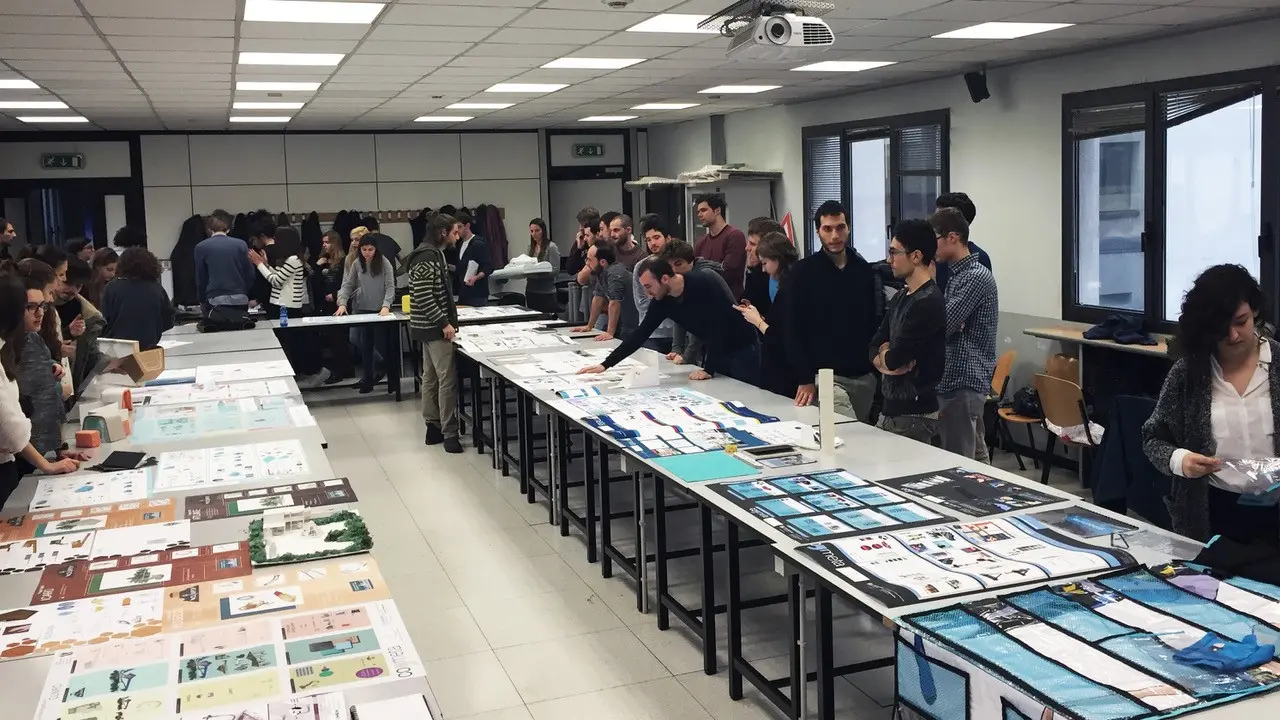
The image documents a review session or an exhibition of projects within a university laboratory or a professional studio. In a large, bright room, numerous students and professionals are arranged along long rows of tables displaying graphic designs, project boards, and small three-dimensional models. The participants are captured in moments of engagement: some are carefully observing the works, while others discuss in small groups. The environment features a functional aesthetic, with paneled ceilings, LED lighting, and large windows overlooking an urban setting. The overall atmosphere conveys a sense of industriousness, creativity, and intellectual exchange typical of the final phase of a workshop or a design exam.
Projects designed by the students of the COmeta Metaproject Lab

COmeta aims to develop product concepts that improve the quality of life of people with autism, and the more than one hundred forty projects developed over the years show that there are a lot of opportunities that can have a targeted and positive impact on the daily lives of people with autism.

The idea of the Open COmeta platform stems from the desire to give value to the significant amount of developed projects, making them accessible to interested companies and associations and expanding the still little explored and often inaccessible Design-Autism field.

The student projects represent the starting point, but Open COmeta will be open to anyone who wants to contribute with ideas and projects to improve the quality of life of people with autism.

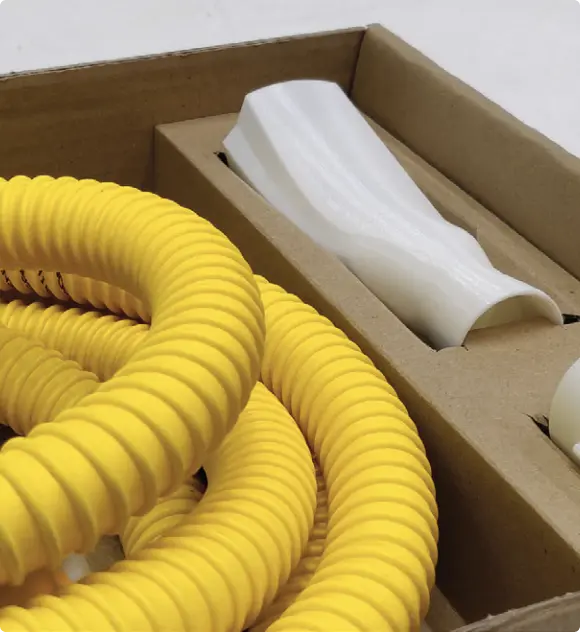
The image shows a close-up of industrial components inside cardboard packaging. Featured is a bright yellow corrugated flexible hose, placed next to a white plastic fitting with a shaped, aerodynamic form. The scene suggests an assembly kit or replacement parts for a technical device.
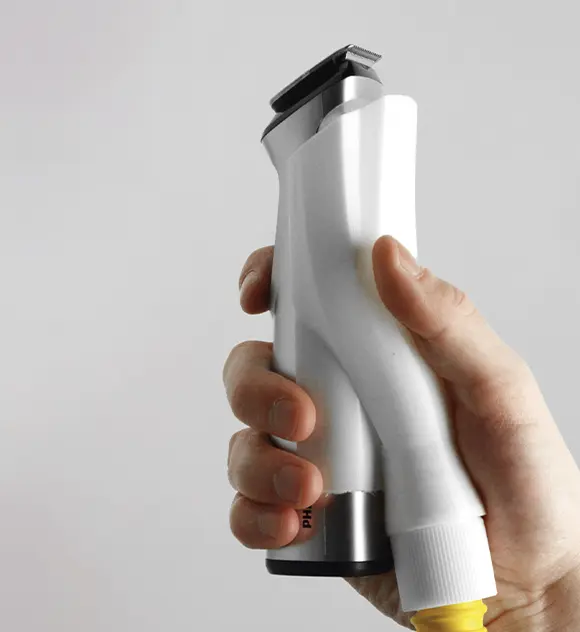
A hand holds an electric shaver (Philips brand) partially enclosed in a white, ergonomic plastic shell. This add-on component appears designed to channel hair clippings toward a yellow flexible hose connected at the base. The grip looks solid and tailored to enhance control during use, combining a personal grooming device with an integrated vacuum system.

The intent is to create a reference community on the autism topic, a space to share ideas, projects, and opinions, a knowledge and dissemination network that starts from education but extends to anyone who has a valid idea on the topic, relying on the past experience of partners and experts to evaluate the actual worth of the shared ideas.

For this reason, the platform is developed in an Open Source logic, based on a system of values that celebrate open exchange, collective participation, transparency, and community development without discrimination. The projects on Open COmeta will be accessible and replicable, providing support materials for the realization of products and using rapid prototyping methods. Above all, all members of the community will have the opportunity to modify and/or improve the proposed ideas, adding value to the initial project.

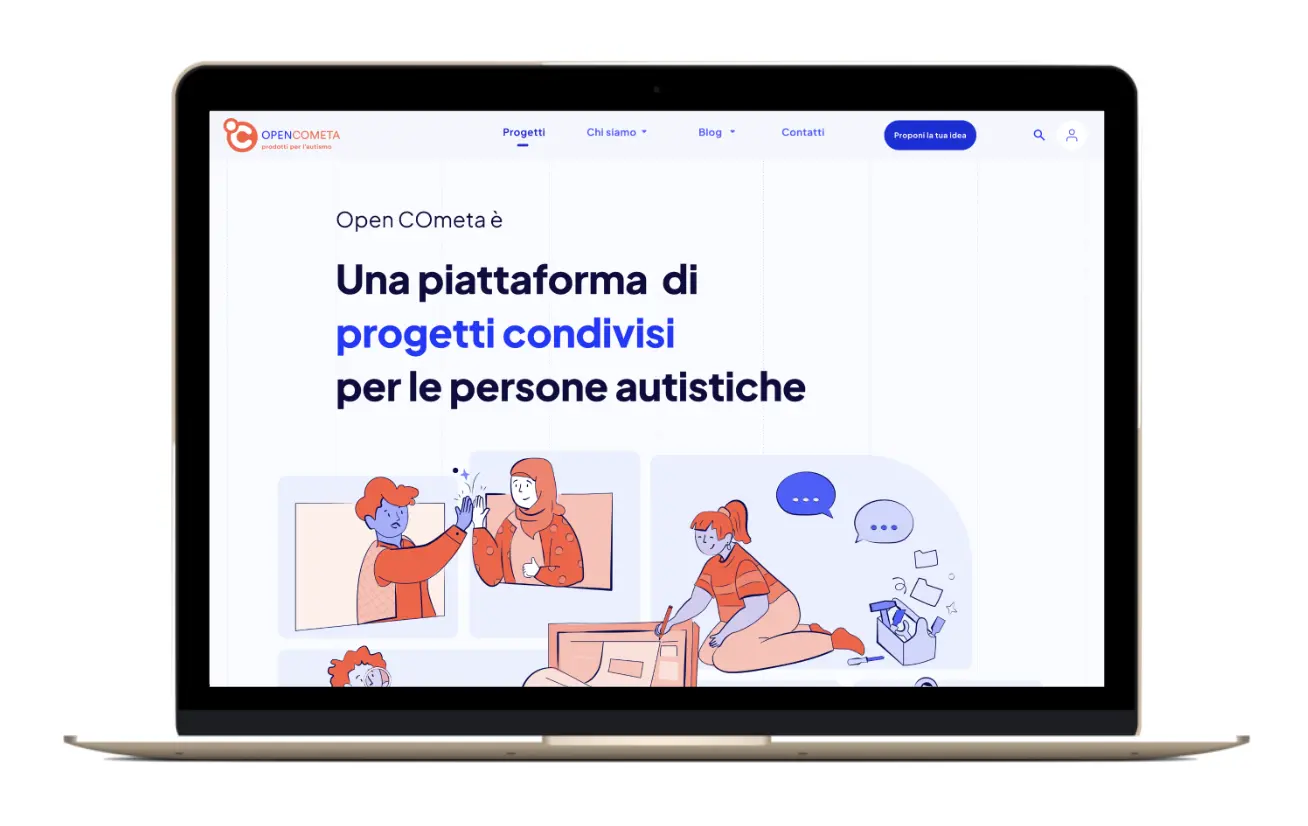
The image features a laptop mockup displaying the Open COmeta homepage, a platform for shared projects supporting autistic individuals. The design is modern and minimalist, utilizing a white background to emphasize the blue and orange typography. The top navigation bar provides quick access to core sections and includes a prominent button for submitting new ideas.  At the bottom of the screen, stylized illustrations complement the main headline by depicting scenes of collaboration and creativity. These graphics convey a strong sense of inclusion and mutual support, highlighting the portal's mission as a community-driven and participatory space.
Open COmeta homepage

In the perspective of continuous dialogue with experts but especially with users, who are at the center of the project, the platform was tested with people with autism and caregivers to validate the interactions and verify the site's usability in relation to their needs during the development phase.
The portal design phase actively involved a group of 8 voluntary students (Alessandra Cacciola, Matilde Molinari, Marco Suigo, Marta Marino, Olivia Segato, Sebastian Stoppa, Martina Sciamanna, Bianca Reale) who contributed to the concept's realization with CoDesign activities.

Likewise, the Inclusive Hackathon Open COmeta was promoted as an extracurricular activity that involved 30 students interested in contributing to the theme of autism, called upon to redesign and implement, in an "Open" key, products chosen from the concepts of the COmeta Lab that will populate the platform during the first phase of the website's release.

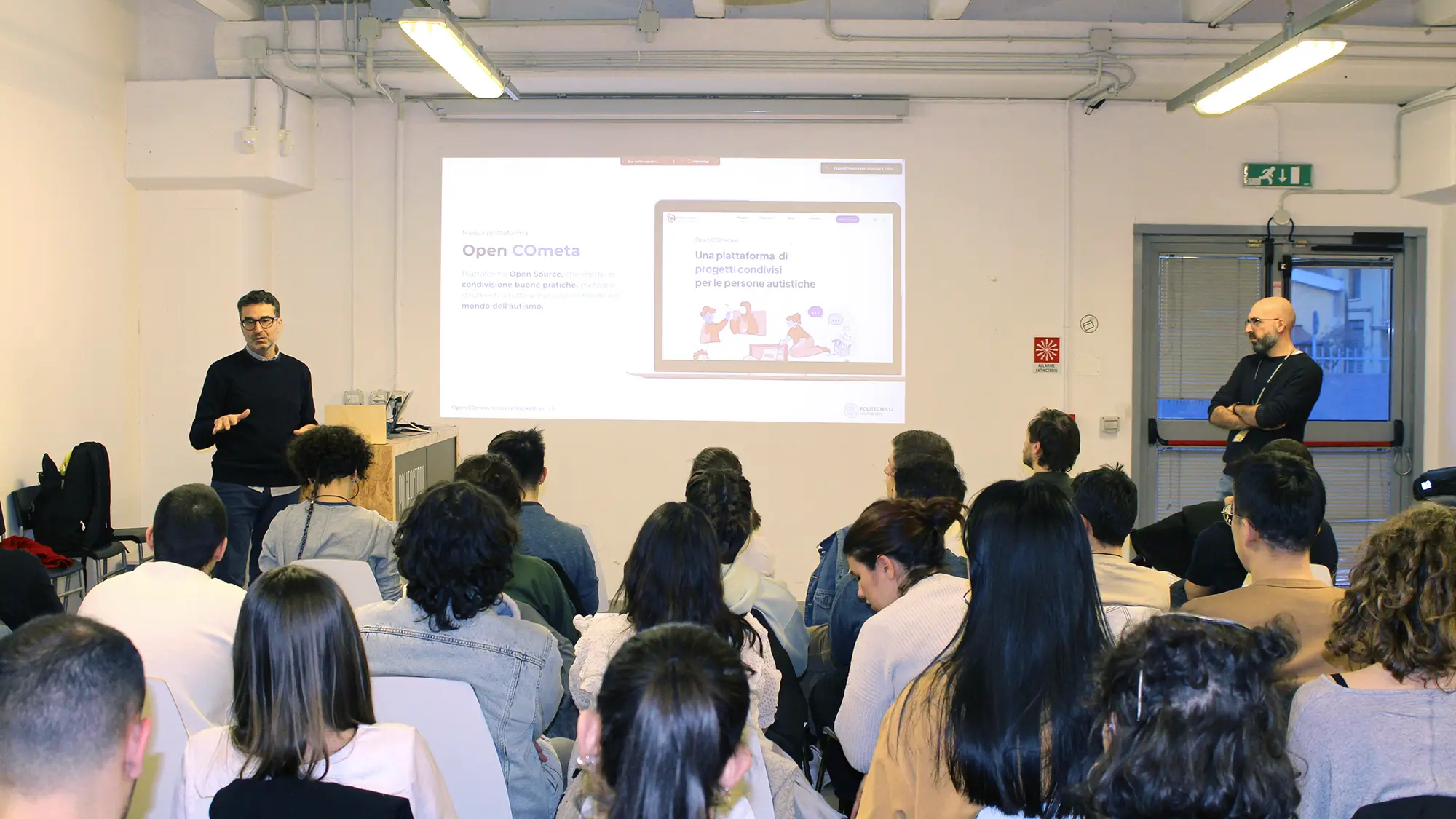
The latest image captures a live presentation dedicated to the Open COmeta platform, ideally linking the conceptual infographic of the creative process to its practical application. In an industrial-style conference room, a speaker explains the project to an attentive audience, mostly consisting of young people. The screen displays the Open COmeta homepage, described as an "Open Source platform that shares best practices" for the autism community. Another man stands to the side with crossed arms, observing the scene, while the neon lighting and the room's basic structure emphasize the workshop and educational nature of the event. The atmosphere suggests a moment of knowledge sharing and social innovation.
Launch of the Inclusive Hackathon Open COmeta

The final event of this initiative was held on May 10th, where participants presented to teachers and experts the prototypes developed during a month of activities. The next step will be to share them with the autistic community and test the ideas, to validate and improve the products with the users.

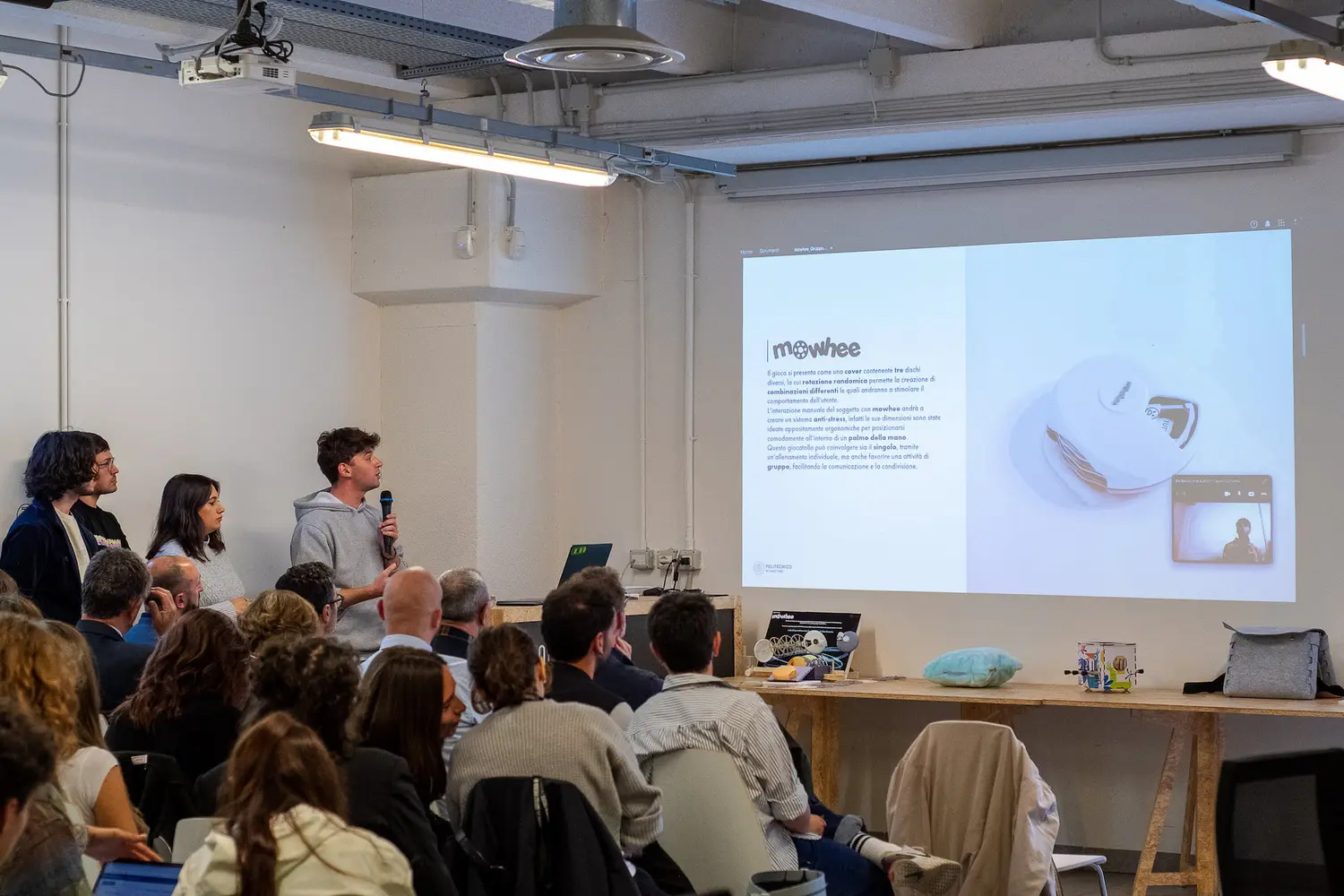
The image documents a design project presentation, likely within an academic or professional setting related to the Politecnico di Milano. A young speaker is talking into a microphone before an audience, presenting "mowhee," an object described on the slide as an ergonomic anti-stress device that promotes communication and group sharing. Next to him, other colleagues follow the presentation. The screen shows an image of the prototype and a detailed description of its operation based on the random rotation of components. The room has a technical aesthetic, with exposed pipes and a table in the back displaying other physical models and prototypes, highlighting the practical and design-oriented nature of the event.
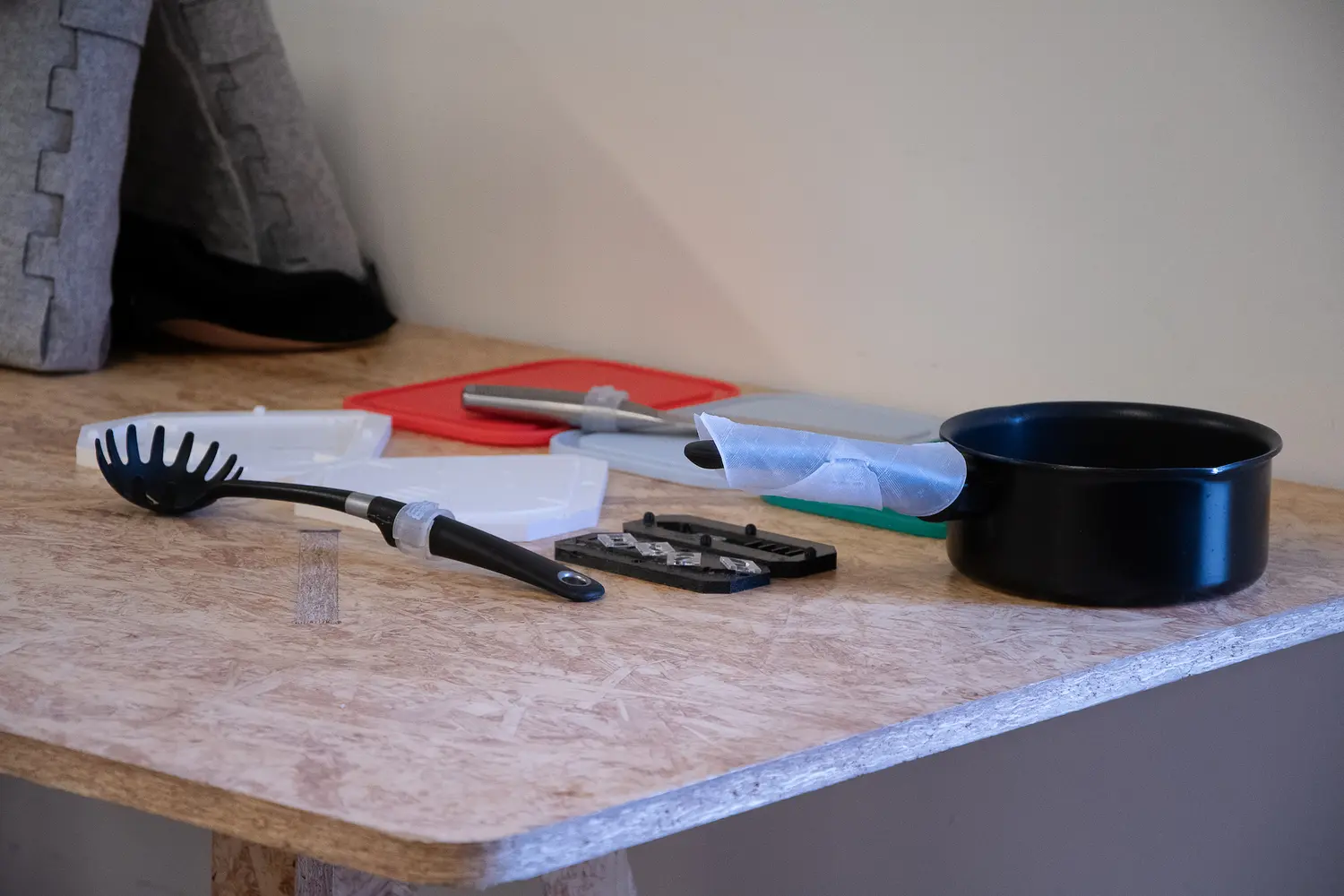
The image shows a series of kitchen utensils modified with functional prototypes, presented on a chipboard work surface. In the foreground, a pasta server and a small black pot are visible, both equipped with custom grips made from a semi-transparent plastic material. These components, likely 3D-printed, appear designed to improve the ergonomics or accessibility of the tools. In the background, other prototypes are visible, including colorful cutting boards and small black modular elements with transparent inserts. The composition suggests a testing phase or the display of inclusive design solutions aimed at facilitating daily household activities.
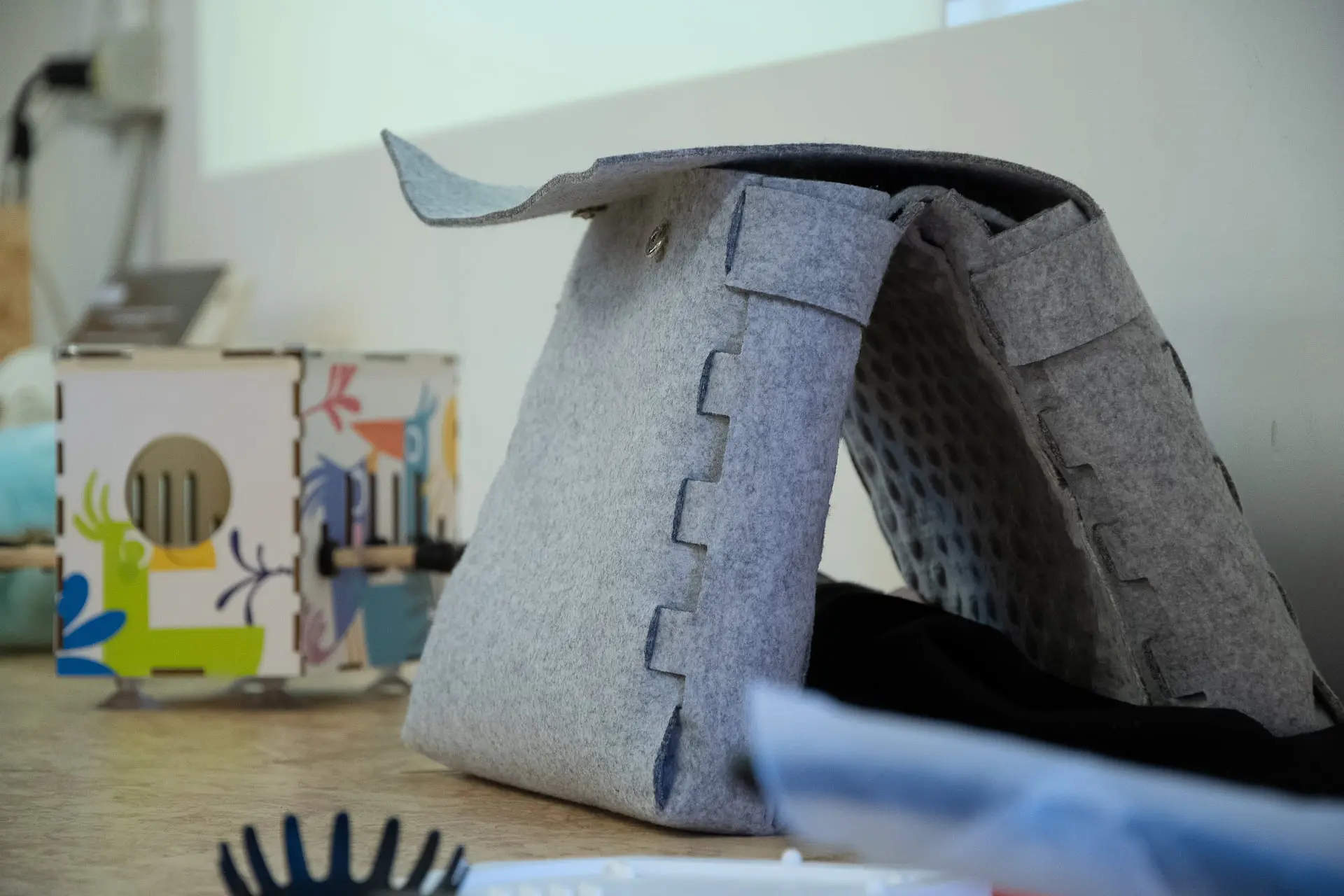
The image shows several design prototypes made from different materials, displayed on a work surface during what appears to be a presentation or project review phase. In the center of the composition, a grey felt structure stands out, folded into a hut or tunnel shape. The edges feature interlocking teeth and snap fasteners, suggesting a modular or easy-to-assemble system. In the background to the left, there is a wooden or cardboard cube decorated with colorful illustrations and a circular opening, resembling an educational toy or a small animal shelter. The setting is bright and professional, with a projection screen visible at the top, confirming the context of a workshop or design laboratory.
Final event of the Inclusive Hackathon with the presentation of the final prototypes. Photo credit: Martino Zinzone

The project is open to dialogue with other operators working on the theme, as well as to entities involved in the world of digital manufacturing. In this regard, thanks to Fab Lab Makeinprogress and PoliFactory for their support in the activities and prototyping of the projects of the Inclusive Hackathon Open COmeta.


Founding Partners
Dipartimento di Design, Politecnico di Milano
Fondazione Trentina per l’Autismo

Promoters
Didattica Innovativa

Share on: