Trame Locali: Narrating, Imagining, Inhabiting

An Experiment in Collective Intelligence

Trame Locali. Sustainable and Narrative Pathways of the Lower Monferrato is a project that emerged from a simple yet radical question: how can we tell the stories of territories without reducing them to postcards or stereotypical narratives? How can we bring to the surface, alongside official “History,” the living stories of those who inhabit, traverse, and care for these places every day?

Launched and completed in 2025, the project involved the municipalities of Albugnano and Cocconato, in the Lower Astigian Monferrato, weaving together participatory design, anthropology, storytelling, and experimentation with Artificial Intelligence. The project was led by the Polimi DESIS Lab of the Department of Design at Politecnico di Milano, in collaboration with Ideazione srl , the municipalities involved, and a broad network of local actors and experts. The initiative took place within the framework of activities aimed at enhancing intangible heritage and inner territories, funded through cascading calls of the PNRR project CHANGES – Cultural Heritage Active Innovation for Sustainable Society, financed by the European Union – Next Generation EU.

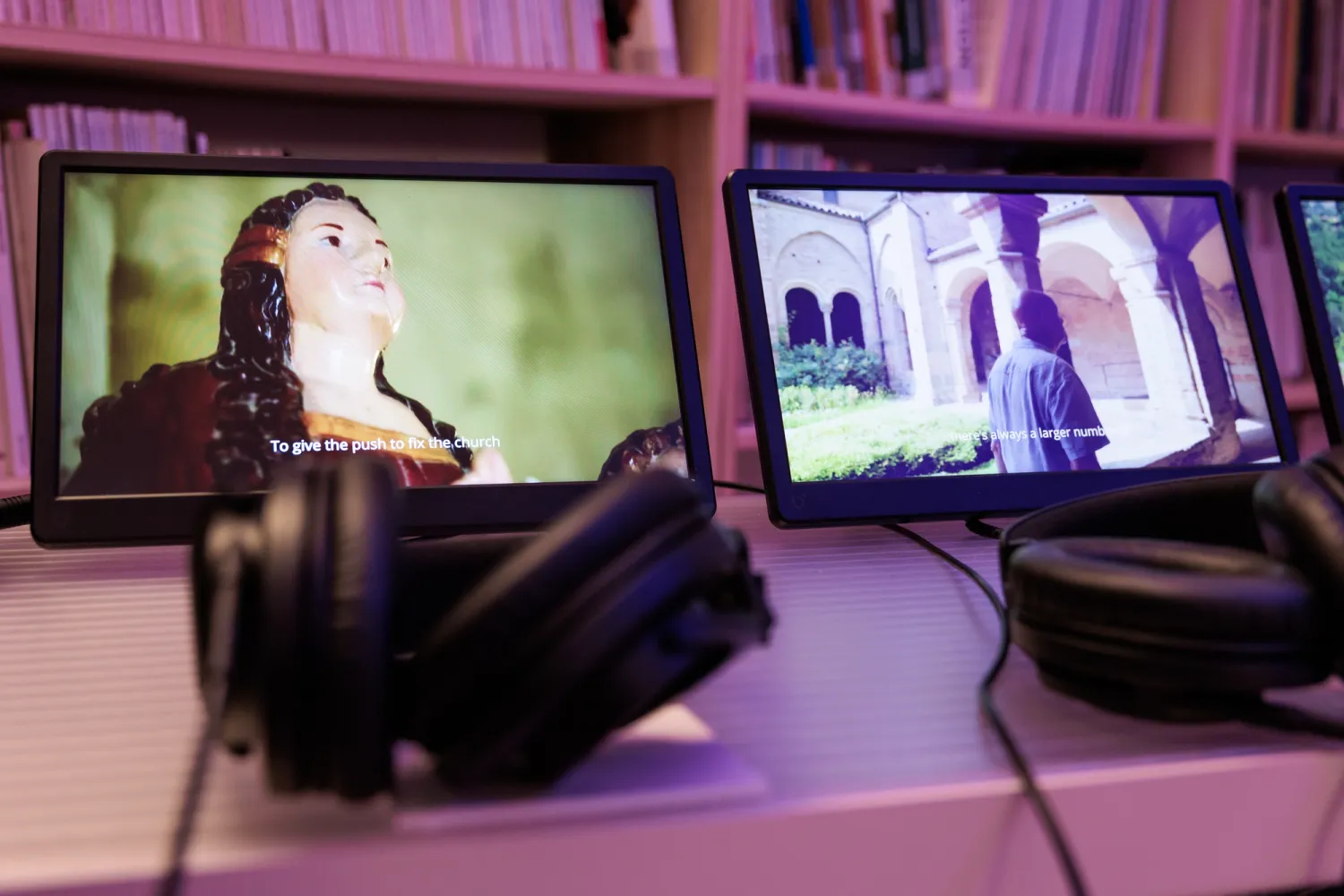
The project concluded with two public moments of restitution. The first, held at the Circolo del Design in Turin (November 18, 2025), featured an experiential exhibition and a roundtable discussion with project partners and external guests, focusing on territorial storytelling as a tool for cultural activation, regeneration, and collaborative governance. The second took place on November 30, 2025 directly within the territory, with an itinerant day between Cocconato and Albugnano during which the co-designed pathways were inaugurated.
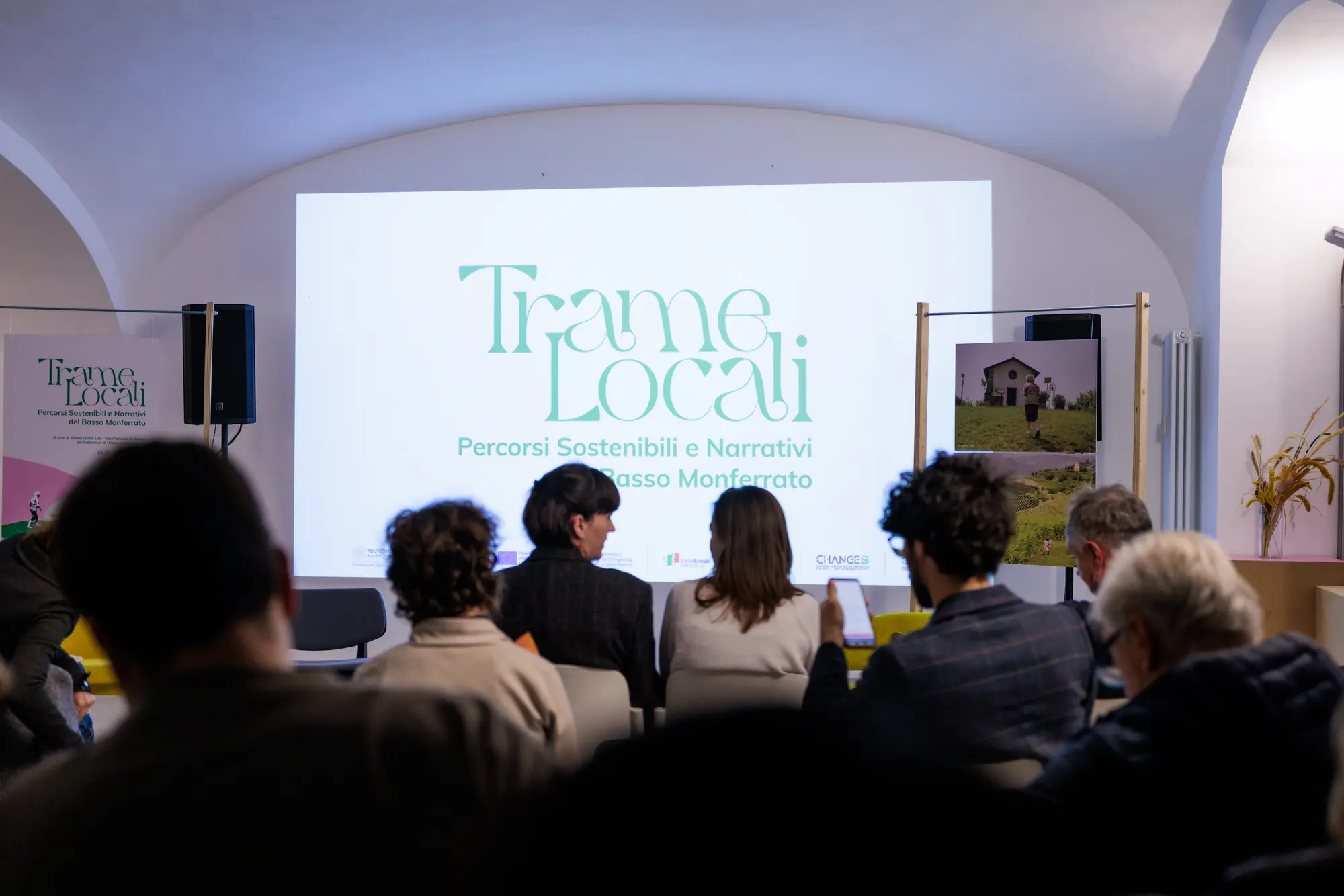
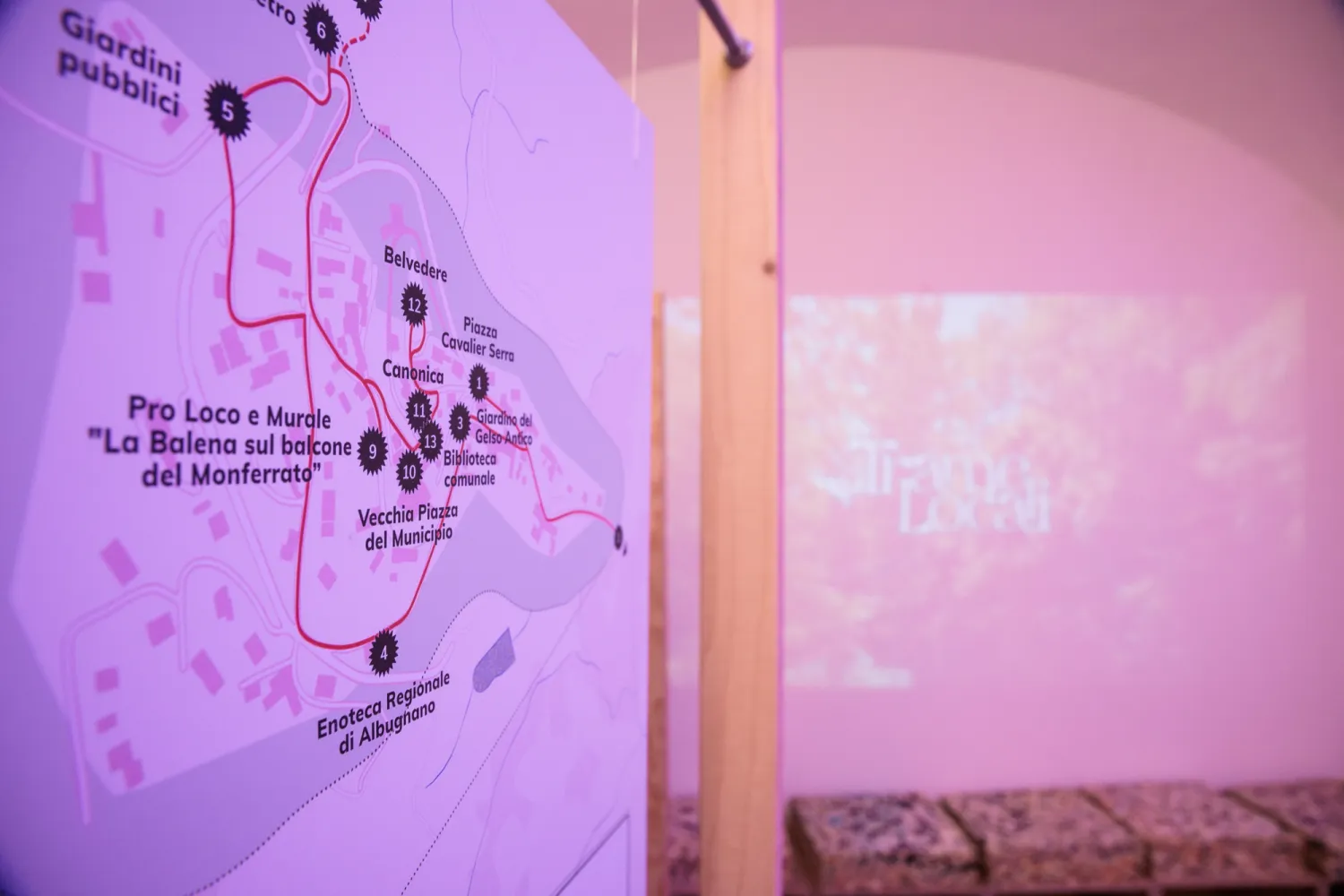
Photo talk and exhibition in Turin ©Courtesy of Circolo del Design, photo by Walter Chiorino

An alternative narration of territories

Trame Locali chose to complement official historical narratives with a more intimate and relational form of storytelling, capable of giving voice to everyday acts of care and to the daily choices that transform territory into a lived and shared space. The project leaves behind not only outputs – two digital cultural itineraries, a narrative map, a series of audiovisual materials, and speculative scenarios – but above all a method: open, situated, and relational. A process built through collective work involving researchers, professionals, and local communities.

The itineraries were mapped through collaboration among environmental hiking guides (Monica Ciravegna and Lucia Cane), local administrations, and producers. This active and deeply rooted network not only knows the territory but cares for it, narrates it, and welcomes others into it on a daily basis. The method rejects singular or hierarchical narratives and places the plurality of perspectives at its core. It is an approach that can be replicated in other territories to promote a form of cultural tourism that is non-extractive, generative, and grounded in relationships with those who live in these places.

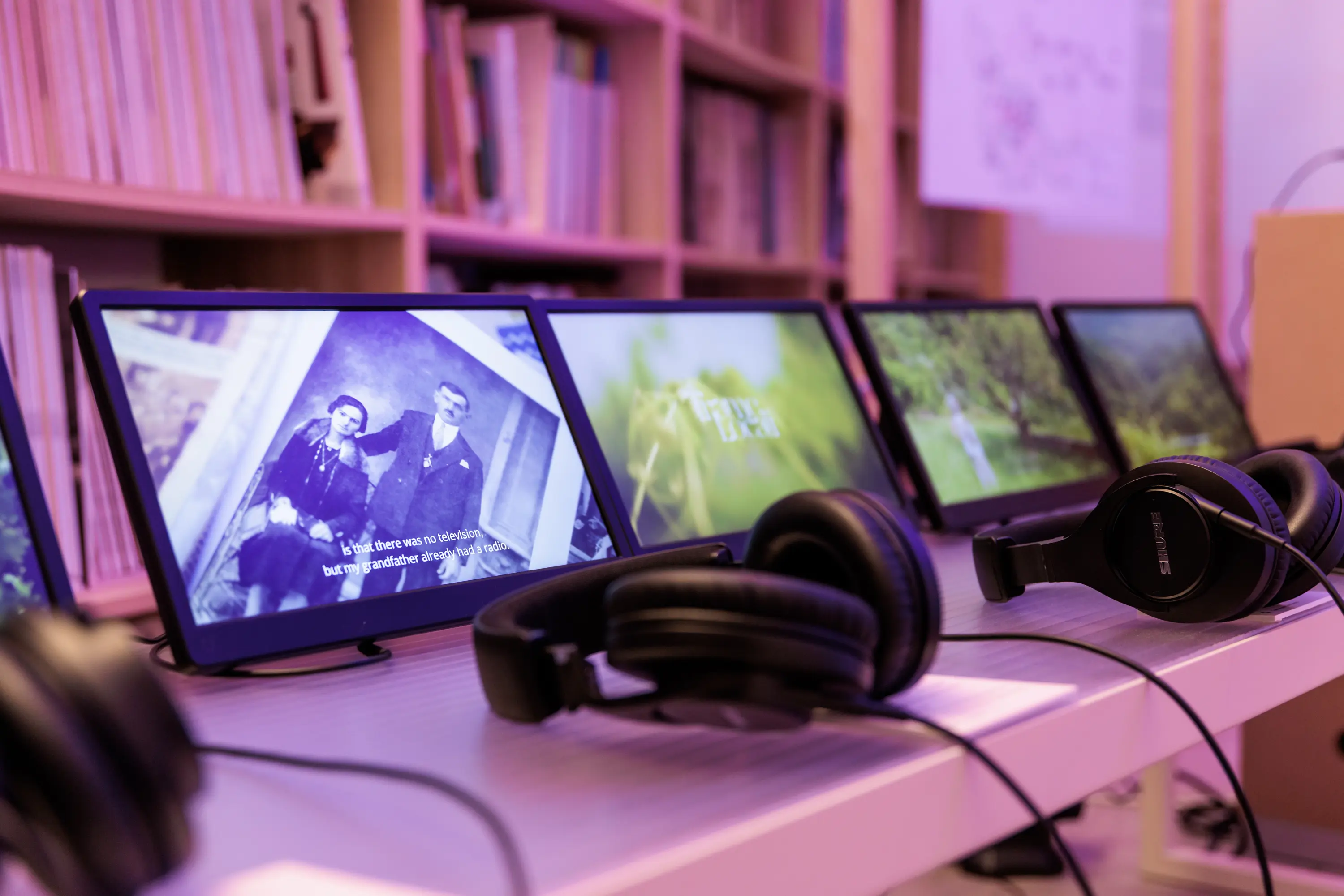
Photo talk and exhibition in Turin ©Courtesy of Circolo del Design, photo by Walter Chiorino

Ethnographic interviews were conducted by an anthropologist from a local cultural association (Lo stagno di Goethe ETS), who collected stories and memories from residents, highlighting the depth of the relationship between people and places. Video testimonies were filmed and edited by the production company Base Zero. Part of the project explored the potential of Artificial Intelligence, in collaboration with researchers from Politecnico di Milano and InTra APS, to generate speculative future scenarios based on the materials collected in the field. The Polimi DESIS Lab also curated the visual identity and exhibition design of a new exhibition space in Albugnano, as well as the project’s temporary exhibitions. Together, these contributions formed a complex platform: an app featuring geolocated itineraries, multimedia content (video, audio, scenarios), and interactive elements developed by the web services and technologies company Suggesto srl.

Artificial Intelligence and territorial imagination

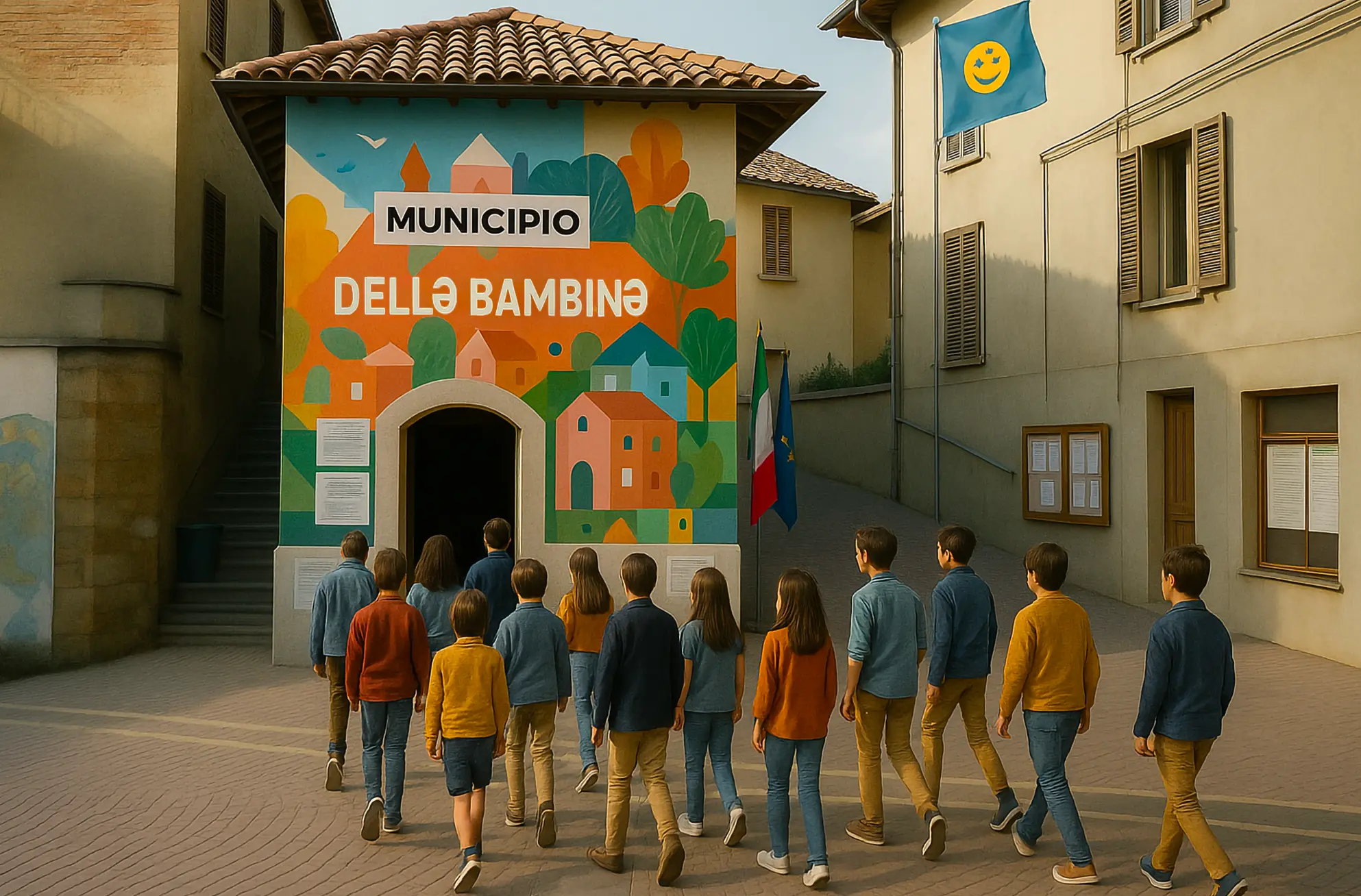
One of the most innovative components of Trame Locali was the integration of Artificial Intelligence into the narrative process. AI was not used to simplify, but to multiply points of view: an external agent with which to engage in imagining alternative futures non-predictive, but provocative and critical. Starting from the data and stories gathered in the field – also drawing on the experience of the previous European project Human Cities / SMOTIES and continuing collaboration with one of its pilot territories – five scenarios of territorial transformation were developed, rooted in real challenges: from collective care to cooperative economic models, from relationships with nature to the futures of agriculture and technology. AI generated short stories and speculative visualizations based on real photographs taken along the itineraries. This highly iterative process revealed limitations, biases, and misalignments with the project’s intentions, becoming a critical mirror through which the team could more consciously interrogate its own imaginaries. The resulting images – defined as “speculative postcards”– are distributed along the routes in both digital form (within the app) and printed format, inviting visitors to complete the narratives with their own imagination before unlocking the textual scenarios.

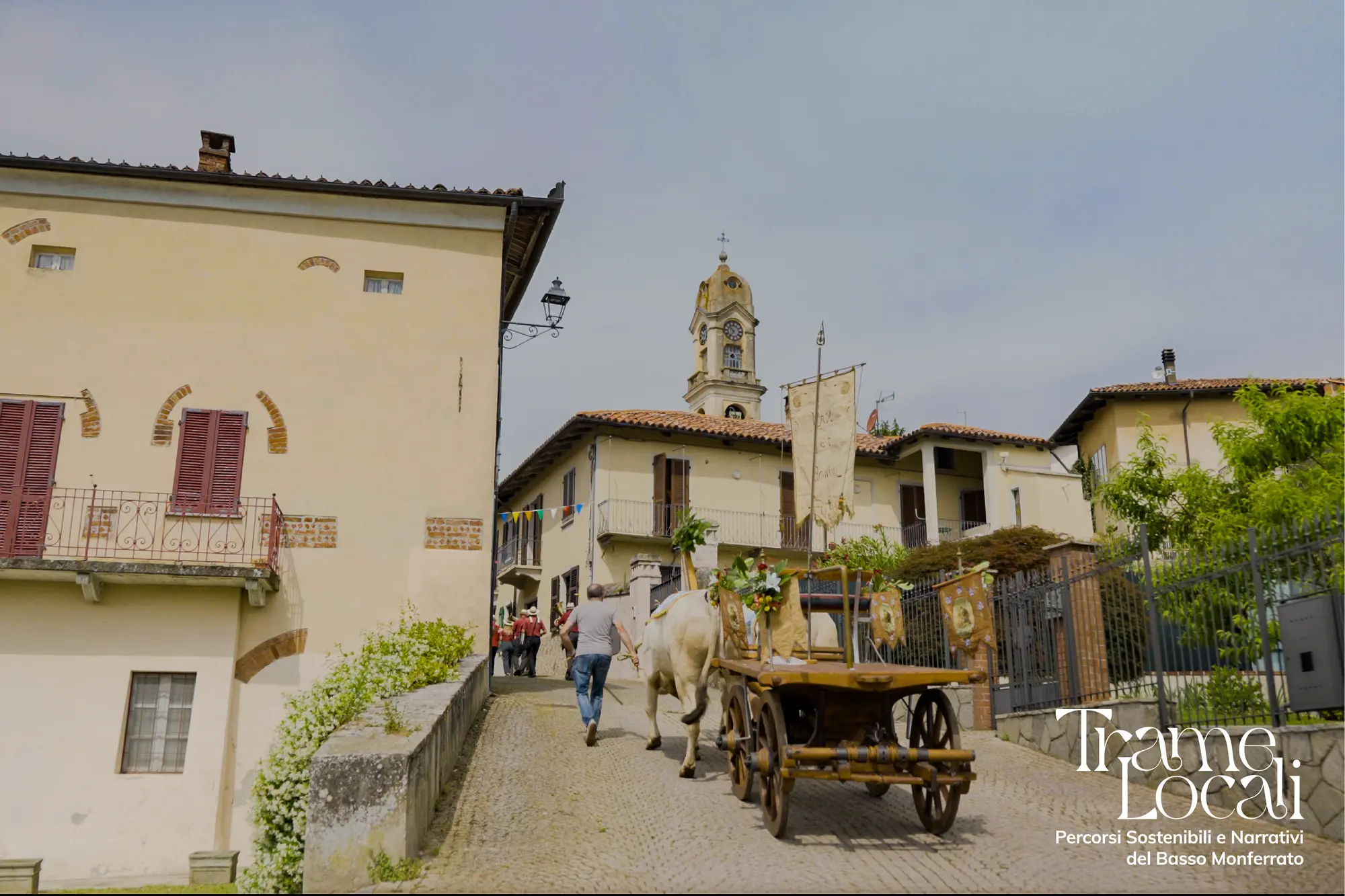
Celebration of the Patron Saint’s Festival

From February onward, the local territorial network will take over management of the app and itineraries, progressively integrating them with local and national tourism and cultural promotion events, and continuing to enrich the content to dynamically enhance the territory.

What if children had real political power in a country’s decision-making?

Scientific coordination: Davide Fassi, Annalinda De Rosa, Marco Finardi, Daniela Petrelli

Project management: Annalinda De Rosa, Marco Finardi, Greta Crespi

Partner:  Ideazione S.r.l.

Exhibition design: Nadia Pirovano

Graphic design: Maria Maramotti

Local story collection and dramaturgical project: Lo stagno di Goethe ETS

Video production: Base Zero

AI-enabled subjective mappings: Marco Finardi, Daniela Petrelli, InTra APS (Alessandro Ianniello and Riccardo Palomba)

Dissemination support: Circolo del Design di Torino

Digital ecosystem – app development: Suggesto s.r.l.

Share on: