
Design(ing) Manufacturing Collaboration

By María Eugenia Sosa Martí, Caterina Dastoli and Silvia D. Ferraris

This volume, titled Design(ing) Manufacturing Collaboration. The Case of the Furniture Sector in Uruguay, aims to bridge the gap between designers and manufacturing companies by presenting a design intervention intended to create spaces for exchange and collaboration between those who design and those who produce.

The research is rooted in the context of the Uruguayan design landscape and starts from the premise that collaboration between designers and manufacturing companies in Uruguay remains limited, mainly due to the historical separation between the academic sphere and the productive sector.

Design has often followed predominantly theoretical and cultural trajectories, remaining distant from the dynamics of industrial production, while companies have mainly focused on short-term objectives. In response, the publication reinterprets design as a situated and relational practice, capable of acting in local productive contexts and contributing to the creation of social and economic value.
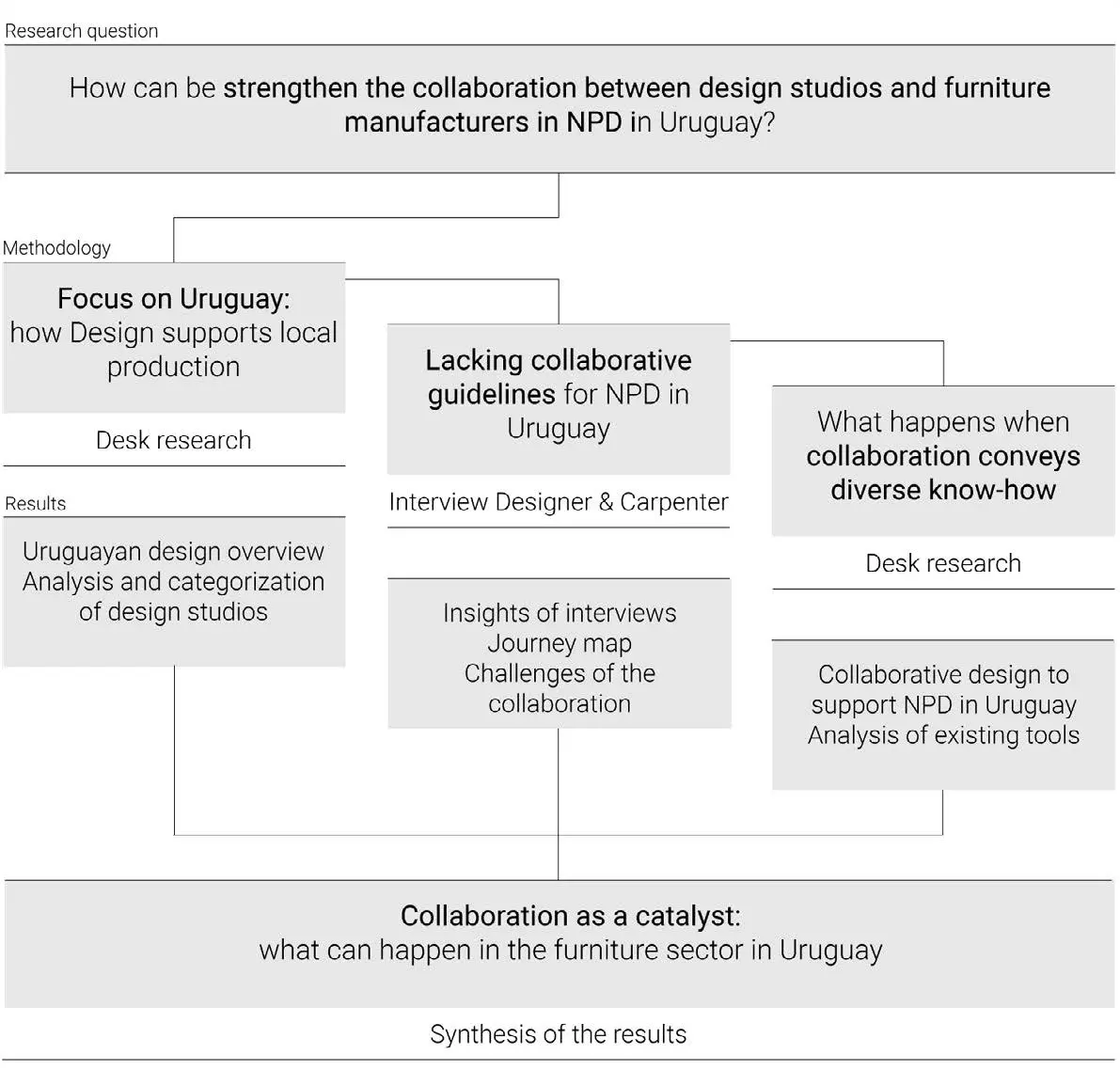
Structure of the research. Image taken from the chapter "Overview of the Research Process".

Building on a theoretical reflection on design in the Latin American context, the work explores the historical tensions between industrialization, craftsmanship, scientific knowledge, and local traditions, proposing a pluriversal vision of design. Through an in-depth investigation of collaboration between designers and manufacturers in the furniture sector, the research highlights shortcomings, barriers, and potential in the new product development process, with a particular focus on the furniture industry.

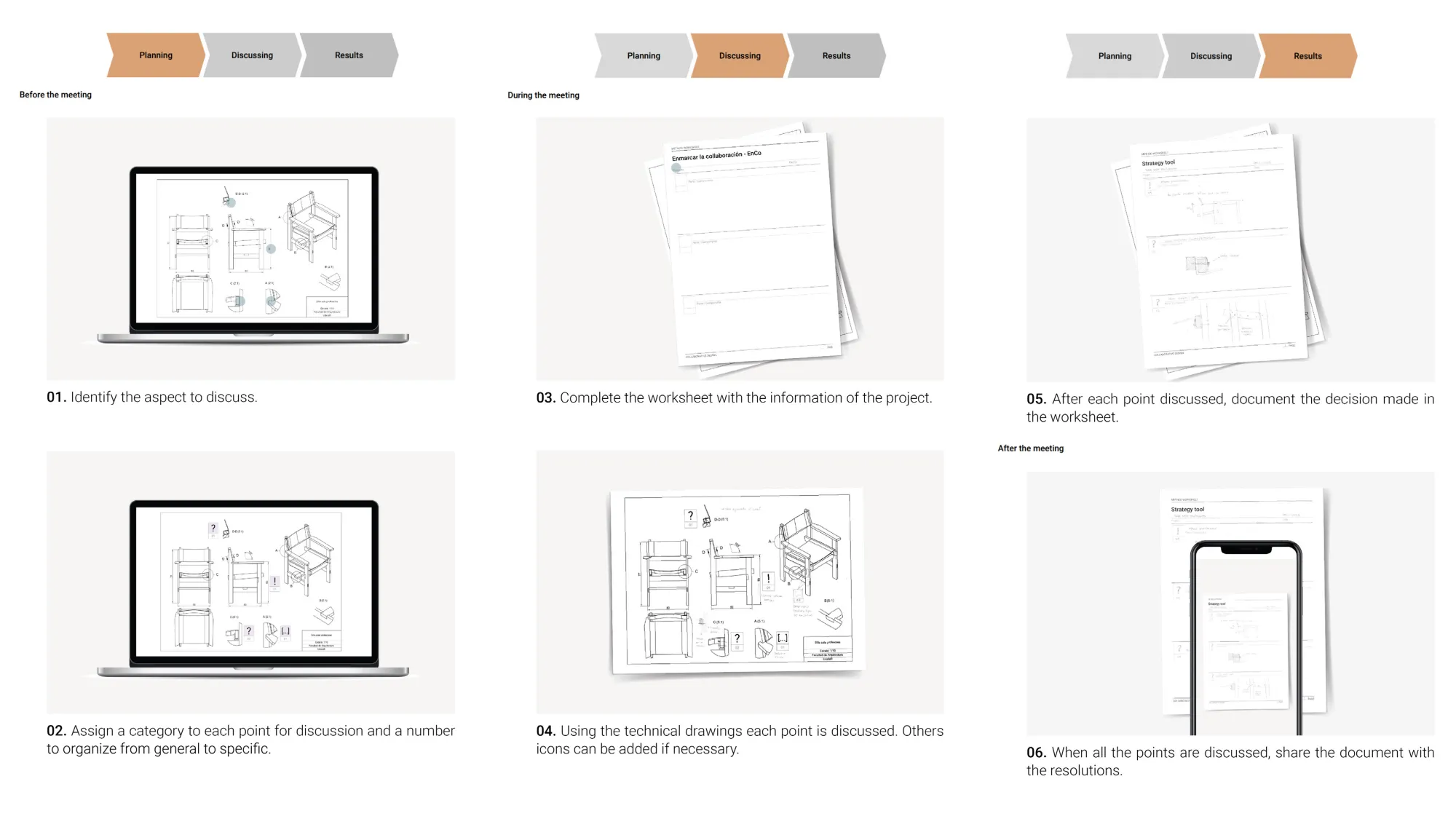
On this basis, EnCo was developed, a design tool aimed at strengthening collaboration and facilitating the exchange of knowledge among different actors, conceived from insights gathered directly from both design studios and production realities.

Sequence of Use of EnCo: storyboard (the chair used in the examples was designed by the Instituto de Diseño - FADU). Image taken from the chapter "En(Co): A Proposal for Enabling the Catalyzing Potential of Collaboration in Uruguay".

The book thus offers a concrete approach for building a collaborative dialogue space between design and manufacturing realities. It also extends the discussion to the scalability and adaptability of the model, examining possibilities for application in other productive sectors and the future role of digitalization and artificial intelligence, while maintaining a strong connection to the local context.

Design(ing) Manufacturing Collaboration is available in the FrancoAngeli open-access catalog.

Share on: