
Designing the Transition

By Paola Bertola, Carmen Bruno, Erminia D’Itria, Silvia Maria Gramegna, Francesca Mattioli, Michele Melazzini and Xue Pei.

The image is an abstract graphic background characterized by a dark petrol blue gradient. The composition features minimalist, blurred geometric shapes that convey a sense of depth and modernity: two unfocused circular shapes (a larger one on the left and a smaller one on the bottom right) and a radial geometric shape resembling a stylized star in the upper right. The style is clean, understated, and professional, consistent with the institutional visual identity of the other graphic elements in the series.

Designing the Transition. Seven design perspectives to build capacities for people, organisations and ecosystems addresses the urgent need for sustainable transformation by proposing innovative approaches that integrate design as a strategic force for systemic change.

The volume explores how design can build capabilities at multiple levels – individual, organizational, and ecosystemic – with the aim of demonstrating its potential as a driver of intentional, informed change. The book offers tools, methodologies, and new perspectives that help readers navigate the complex dynamics of sustainability transitions, supporting both interpretation and more effective action.

Structured in two parts, the book first introduces the ECODeCK project, a design-driven capacitybuilding model developed to support sustainable transitions in the manufacturing sector.
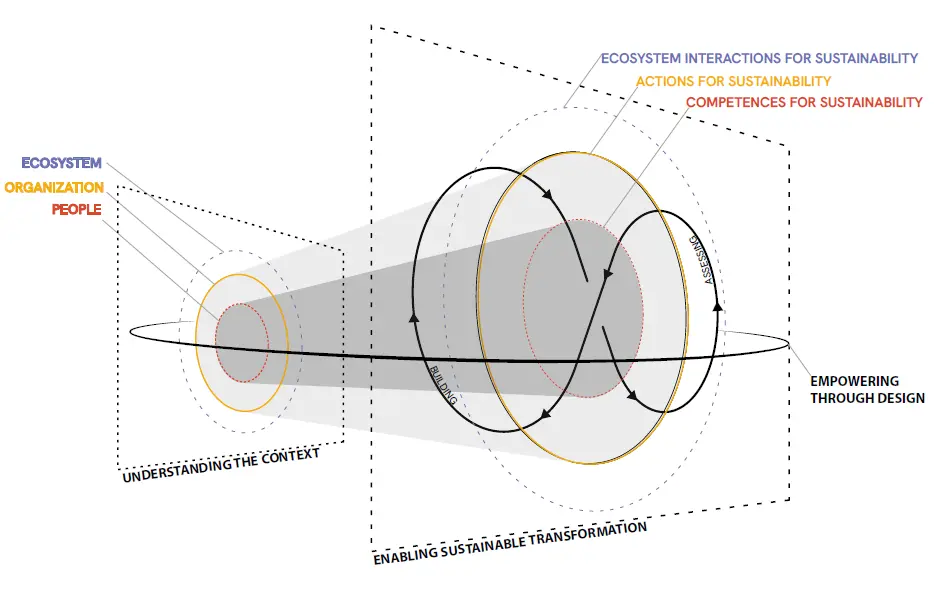
The image is a complex conceptual diagram illustrating a model of transformation toward sustainability through design. The structure unfolds along a horizontal axis, moving from left to right through two main phases.
Visualisation of the ECODeCK Capacity building model, ch. 2, p. 32.

This initial section outlines its theoretical underpinnings, including the Sustainable Transition Competence framework and highlighting the role of design in enabling transformative learning processes.

The second part of the book articulates seven key perspectives through which design can interpret and guide sustainability challenges. Each perspective addresses a critical dimension of change – participatory action, collaborative systems, regenerative creativity, organizational culture, circular manufacturing, learning processes, and systemic change. The book thus highlights the potential of design to facilitate innovation not only in individual behaviors but also in the development of broader strategic interventions capable of shaping systemic transitions.

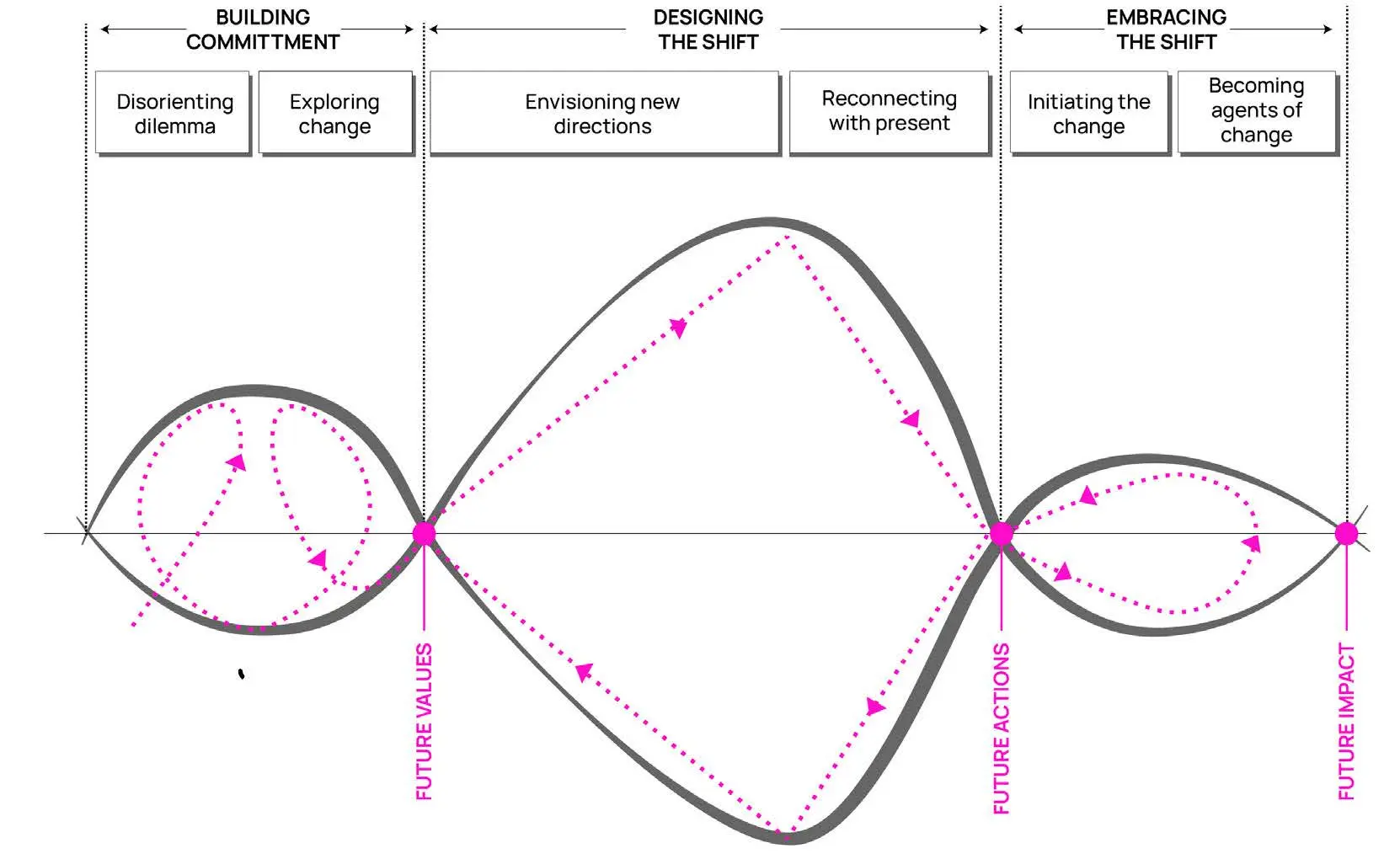
The image is a conceptual diagram illustrating a strategic transformation or change process, graphically structured as a series of three "bubbles" or ellipses of increasing and decreasing sizes along a horizontal timeline. The journey is divided into three main macro-phases.
Visualization of the regenerative creative process, which constitutes the foundation of the ECODeCK model, ch. 6, p. 114.

In this way, design is presented not merely as a problem-solving tool, but as a mindset capable of enabling transitions toward a more resilient and sustainable future.

Designing the Transition is available in open access catalog on FrancoAngeli website.

Share on: