B.lab
Biodesign and Materials Design for Transition Lab
B.lab
Biodesign and Materials Design for Transition Lab
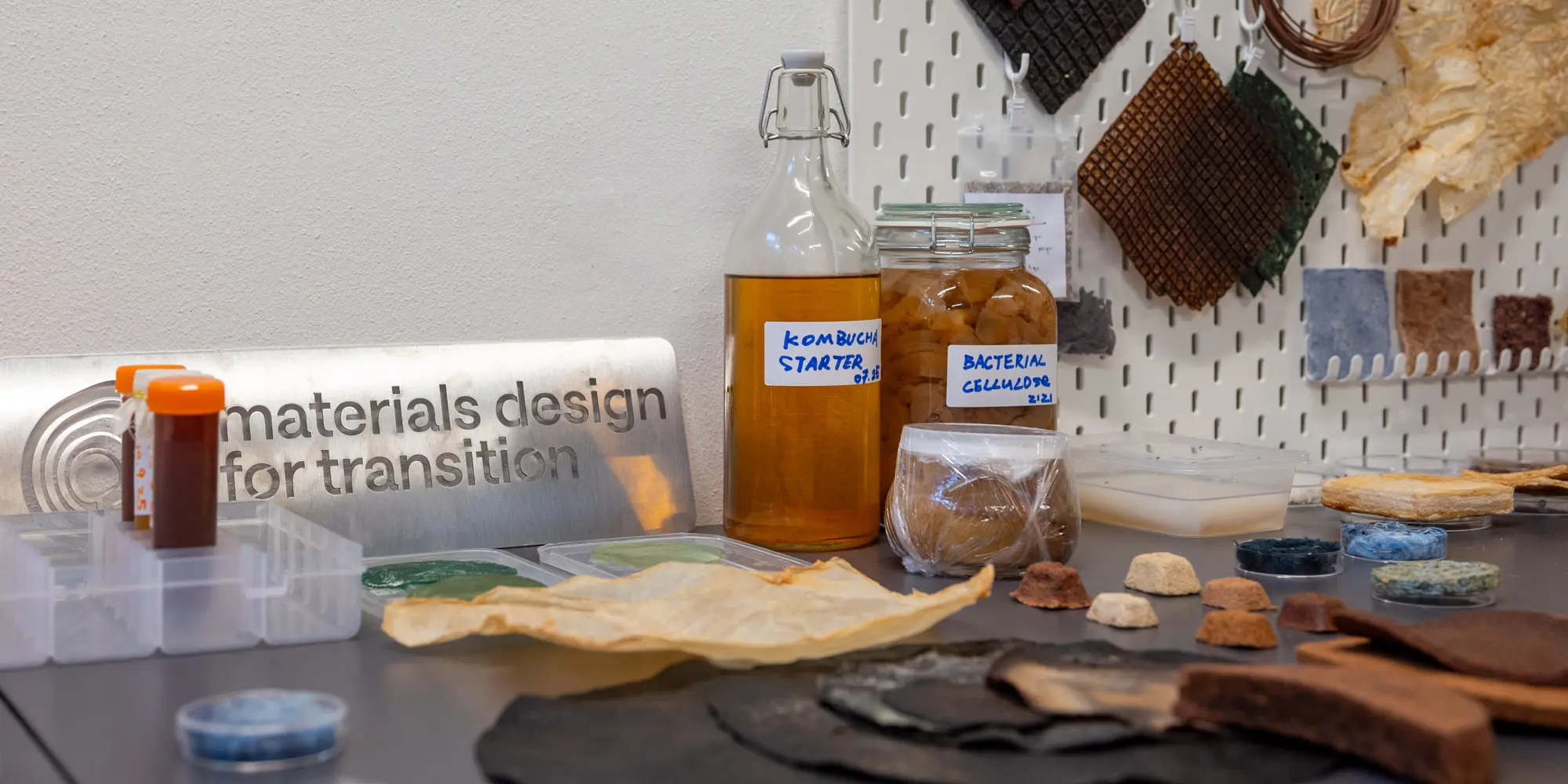
B.lab is a research laboratory dedicated to biodesign and the development of material design practices oriented toward circularity and regeneration. It is conceived as a space in which design engages in the development of new materials derived from unconventional resources – local, abundant, and renewable sources, including organic and inorganic waste streams, as well as microorganisms – through the application of biofabrication processes, alongside DIY approaches and more conventional manufacturing techniques. B.lab investigates novel design paradigms grounded in the interaction between living systems, material cultures, and technologies, contributing to the transition toward environmentally and socially responsible production models. Its distinctive approach lies in the integration of the 'bio' as an active dimension of the design process, understood as a form of material intelligence, comprising behaviors, temporalities, and constraints, with which design engages through practices of observation, negotiation, and care.
Activities
The pilot laboratory is conceived as an experimental environment structured around three primary dimensions:
- a site for exploratory research, dedicated to the development and experimentation of bio-based materials and biofabrication processes;
- a platform supporting educational activities and training programmes focused on regenerative design;
- a collaborative environment that hosts researchers and interns, fostering interdisciplinary exchange and the integration of diverse skill sets.
Equipped with infrastructure for DIY experimentation and essential biofabrication tools, including processes involving algae, fungi, and mycelium, the laboratory investigates materials for ecological transition and explores phenomena such as bioreceptivity, understood as the capacity of materials to host and sustain living organisms.
Context and Project Network
B.lab is funded through the Made in Italy Circolare e Sostenibile (MICS)initiative and developed within the framework of the Fashion-Tech Design for Circularity (FasT4C) project. It is conceived as an open infrastructure operating within an interdisciplinary network that includes the Fashion in Process and Design Intelligences research groups of the Department of Design at Politecnico di Milano, the Department of Management Engineering (DIG) at Politecnico di Milano, and the Department of Life and Environmental Sciences (DISVA) at Università Politecnica delle Marche. Its activities span the fields of fashion design, interaction design, product design, and spatial design, promoting cross-disciplinary, collaborative, and multispecies approaches.
Equipment
B.lab is equipped with basic and experimental machines and tools for biofabrication, digital manufacturing processes, and DIY materials approach. B.lab is continuously upgrading the equipment to incorporate other biofabrication initiatives and possible scale some DIY materials processes.
- Autoclave
- Grinder
- Incubator
- Laminar Flow Hood
- Magnet Stirring
- Homogenizer
- Optical Microscope
- PH Meter
- Electric Stove
- Food Dehydrator
- 3D Printer
- Clay 3D Printer
- Filament Extruder
- Spinning Machine
- And many other different DIY small tools
Magazine articles